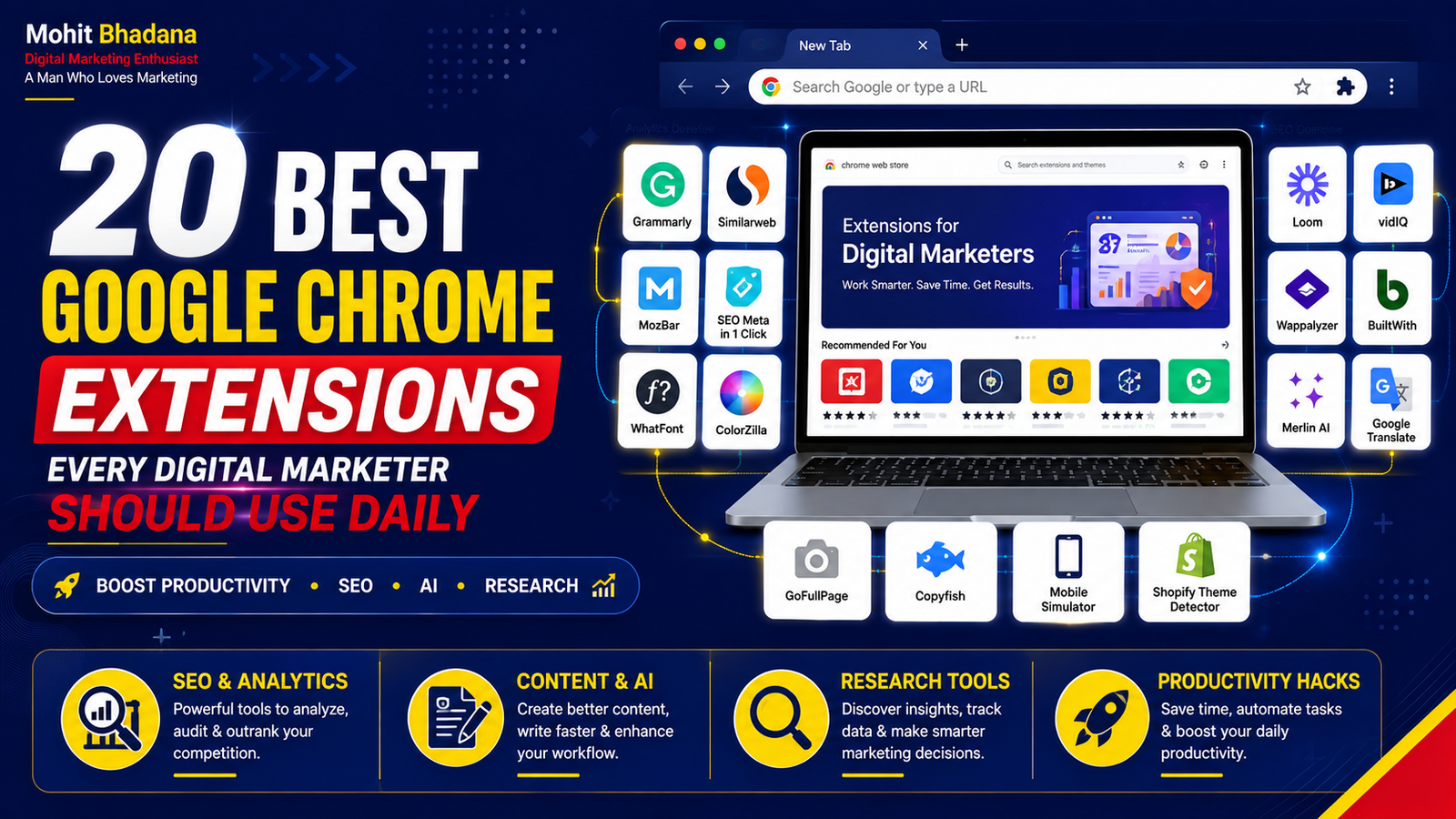
Blog Summary Google Chrome extensions have become essential tools for modern digital marketers. Whether you’re managing SEO campaigns, running Google Ads, creating content, researching competitors, or tracking website performance, the right browser extensions can significantly improve your productivity and workflow. In this guide, you’ll discover the 20 best Google Chrome extensions for digital marketers in 2026, including tools for SEO, AI, website analysis, design, analytics, tracking, YouTube marketing, and competitor research. Whether you’re a beginner, freelancer, agency owner, or marketing professional, these daily-use Chrome extensions will help you work smarter and more efficiently. 20 Best Google Chrome Extensions Every Digital Marketer Should Use Daily Digital marketing is not just about running campaigns or creating content. A successful marketer needs to analyze websites, research competitors, optimize SEO, track conversions, create designs, and improve productivity every day. Google Chrome extensions make these tasks faster by bringing powerful marketing tools directly into your browser. Whether you are an SEO professional, performance marketer, content creator, social media marketer, or digital marketing student, these Chrome extensions can help you save time and improve your workflow. In this blog, we will explore the 20 best Google Chrome extensions for digital marketers in 2026 that you should consider adding to your browser. Website Analysis & Technology Research Extensions 1. Wappalyzer Category: Website Technology Analysis Wappalyzer is one of the most useful Chrome extensions for marketers who want to understand how a website is built. It helps identify technologies used on any website, including: How Digital Marketers Use Wappalyzer: 2. BuiltWith Category: Website Research & Competitor Analysis BuiltWith helps marketers discover the complete technology profile of any website. You can identify: It is especially useful for agencies and freelancers during client research. 3. Mobile Simulator Category: Website Testing Mobile Simulator allows marketers and developers to check how websites appear on different mobile devices. It helps with: Since mobile-first indexing is important for SEO, this extension is useful for website audits. 4. Website Theme Detector Category: Website Research Theme Detector extensions help identify the theme and platform used by websites. Useful for: 5. Shopify Theme Detector Category: E-commerce Research Shopify Theme Detector helps marketers analyze Shopify stores and identify the themes they are using. Useful for: Design, Content & Creator Extensions 6. WhatFont Category: Design WhatFont helps you identify fonts used on any website instantly. Digital marketers can use it for: 7. ColorZilla Category: Design & Branding ColorZilla allows you to pick colors from any website and create color combinations. Useful for: 8. Grammarly Category: Content Writing Grammarly is one of the most popular writing assistants for marketers. It helps improve: Digital marketers can use it for blogs, emails, ads, social media posts, and website copy. 9. VidIQ Category: YouTube Marketing VidIQ is a powerful Chrome extension for YouTube creators and marketers. It provides: 10. GoFullPage Category: Screenshot & Documentation GoFullPage allows users to capture complete webpage screenshots. Useful for: SEO & Website Optimization Extensions 11. SEO Meta in 1 Click Category: On-Page SEO SEO Meta in 1 Click provides important SEO information from any webpage. It shows: It is extremely useful for quick SEO audits. 12. MozBar Category: SEO Analysis MozBar provides instant SEO metrics while browsing websites. It helps analyze: SEO professionals use it for competitor analysis and link-building research. 13. SimilarWeb Category: Competitor Research SimilarWeb helps marketers understand website traffic and audience insights. You can analyze: AI, Research & Productivity Extensions 14. Merlin AI Category: Artificial Intelligence Merlin AI brings AI assistance directly into your browser. Marketers can use it for: 15. Copyfish Category: OCR & Content Research Copyfish extracts text from images, videos, and screenshots. Useful for: 16. Loom Category: Communication & Productivity Loom allows marketers to record screen videos quickly. Useful for: 17. Google Tag Assistant Category: Tracking & Analytics Google Tag Assistant helps verify tracking implementation. It is useful for checking: 18. Awesome Screen Recorder Category: Productivity Screen recorder extensions help create quick videos without using complicated software. Useful for: Marketing Tracking Extensions 19. Meta Pixel Helper Category: Performance Marketing Meta Pixel Helper helps advertisers verify Facebook Pixel installation. It helps marketers check: Essential for Meta Ads professionals. 20. Data Layer Checker / Data Layer Eye Category: Google Tag Manager Data Layer Checker helps marketers analyze data layer information on websites. Useful for: Bonus Chrome Extensions for Digital Marketers Apart from these top 20 extensions, marketers can also explore: Google Translate Useful for international competitor research and multilingual websites. Hunter Find professional email addresses for outreach campaigns. ContactOut Useful for LinkedIn lead generation and prospect research. Koala Inspector Analyze Shopify stores, apps, products, and competitor strategies. Shopify Spy Research Shopify competitors and product strategies. Snow AI AI-powered productivity and research assistance. Final Thoughts The right Chrome extensions can significantly improve the daily workflow of digital marketers. From website analysis and SEO audits to AI content creation, tracking implementation, and competitor research, these tools help marketers work faster and smarter. Instead of switching between multiple platforms, these extensions bring essential marketing capabilities directly into your browser. If you are a digital marketing student, freelancer, agency owner, or marketing professional, installing these Chrome extensions can help you improve productivity and execute better marketing strategies. Official Links: Download These Chrome Extensions for Digital Marketers Below are the official websites or Chrome Web Store pages for the Chrome extensions mentioned in this guide. Always download browser extensions from official sources or the official Chrome Web Store. Website Analysis & Competitor Research Design & Content Creation SEO & Website Optimization AI, Research & Productivity Analytics, Tracking & Performance Marketing Additional Chrome Extensions for Digital Marketers Quick Comparison: Best Google Chrome Extensions for Digital Marketers (2026) Extension Name Category Free / Paid Best For Wappalyzer Website Technology Analysis Free + Premium Identifying CMS, frameworks, analytics & tech stack BuiltWith Competitor Research Free + Premium Website technology and hosting analysis Mobile Simulator Website Testing Free Mobile responsiveness testing Website Theme Detector Website Research Free Detecting WordPress themes and CMS Shopify Theme Detector E-commerce Research Free Finding Shopify themes used
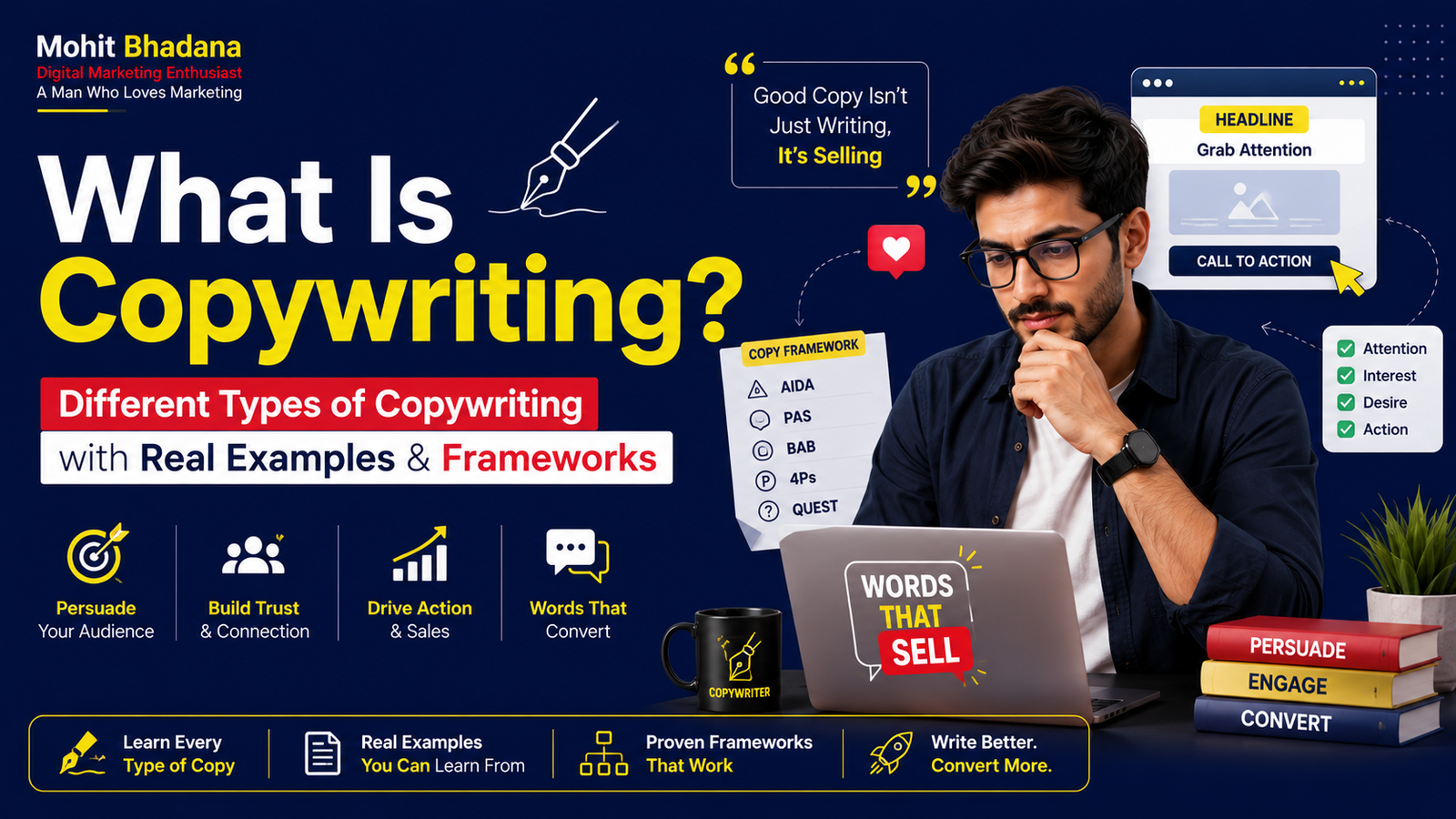
What Is Copywriting? Different Types of Copywriting with Real Examples & Frameworks
Blog Summary Copywriting is one of the most valuable skills in digital marketing because it helps businesses persuade customers to take action. Whether it’s clicking an ad, filling out a form, purchasing a product, or booking a consultation, effective copywriting influences every stage of the customer journey. In this guide, you’ll learn what copywriting is, the different types of copywriting, and how to apply five proven copywriting frameworks—PAS, AIDA, QUEST, 4Ps, and SLAP—using practical healthcare industry examples. This article is designed for marketers, business owners, freelancers, and students who want to write copy that converts What Is Copywriting, and What Are the Different Types of Copywriting with Examples? Introduction Every successful advertisement, landing page, email, social media post, or sales page begins with one essential element—great copywriting. Think about the last time you clicked a Google Ad, signed up for a webinar, or purchased a product online. Chances are, the words you read influenced your decision. Those carefully crafted words are known as copy. Copywriting is more than writing attractive headlines. It’s the art and science of understanding customer psychology and using persuasive language to encourage people to take a specific action. Whether you’re running Google Ads, creating landing pages, writing emails, or managing social media campaigns, learning what copywriting is and how to use copywriting can significantly improve your marketing performance. In this guide, we’ll explore the fundamentals of copywriting, the different types of copywriting, and five proven copywriting frameworks used by professional marketers worldwide. What Is Copywriting? Copywriting is the process of writing persuasive marketing content that encourages readers to take a specific action. That action could be: Unlike general writing, copywriting has one primary objective: Convert readers into customers. Every successful business uses copywriting across multiple marketing channels because persuasive communication directly impacts sales and conversions. Why Is Copywriting Important? Modern consumers see thousands of advertisements every day. Great copywriting helps businesses stand out from the competition by communicating value clearly and persuasively. Effective copywriting helps businesses: Whether you’re a startup or an established enterprise, strong copy can significantly influence customer decisions. Copywriting vs Content Writing Many beginners confuse copywriting with content writing, but they serve different purposes. Copywriting Content Writing Persuades readers to take action Educates or informs readers Sales-focused Information-focused Short and conversion-oriented Detailed and educational Used in ads, emails, landing pages Used in blogs, guides, and tutorials Primary goal: Conversion Primary goal: Education For example: A blog explaining “What is SEO?” is content writing. A landing page convincing visitors to purchase an SEO course is copywriting. The best digital marketing strategies combine both. Different Types of Copywriting Copywriting appears across nearly every digital marketing channel. 1. Advertising Copywriting Advertising copywriting is used in: Its purpose is to capture attention quickly and encourage immediate action. 2. Website Copywriting Website copywriting includes: The objective is to guide visitors toward becoming customers. 3. SEO Copywriting SEO copywriting combines search engine optimization with persuasive writing. It helps businesses: Good SEO copy balances keyword optimization with user experience. 4. Email Copywriting Email copywriting is used for: The goal is to maintain customer relationships and encourage clicks or purchases. 5. Social Media Copywriting Social media copywriting is designed to stop users from scrolling and encourage engagement. It includes: Since users consume content quickly, every word matters. 6. Sales Copywriting Sales copywriting focuses entirely on convincing prospects to buy. It appears in: This type of copy often addresses objections while emphasizing benefits. What Is the Best Example of Copywriting? One of the best examples of copywriting is a Google Search Ad. Suppose someone searches: “Home Nursing Services Near Me” A well-written advertisement might read: Hospital-Quality Care at Home Certified nurses and compassionate caregivers available for elderly care, post-surgical recovery, and medical assistance. Book Your Free Home Assessment Today. In just a few lines, this advertisement: This is effective copywriting in action. How to Use Copywriting Effectively Professional copywriters rarely write without a structure. Instead, they use proven frameworks that are based on consumer psychology. The five most popular copywriting frameworks are: Each framework works best for a specific marketing channel. In the next section, we’ll explore each framework using a real healthcare and elderly home care business example, demonstrating exactly how professional marketers write copy for advertisements, landing pages, emails, sales pages, and social media. The 5 Most Powerful Copywriting Frameworks (With Real Healthcare Examples) Writing persuasive copy becomes much easier when you follow a proven framework instead of starting with a blank page. Professional copywriters don’t rely on creativity alone—they use structured formulas based on customer psychology. Each framework is designed for a specific marketing channel. Choosing the right one can improve click-through rates, conversions, and customer engagement. Let’s explore the five most widely used copywriting frameworks with real-world examples from the Home Care & Elderly Support industry. 1. PAS Framework (Problem – Agitation – Solution) Best For: What is the PAS Framework? The PAS (Problem–Agitation–Solution) framework is one of the most effective copywriting formulas for direct-response advertising. Instead of immediately promoting a product or service, it first addresses the customer’s biggest pain point. People naturally take action faster when they want to eliminate pain than when they simply want to gain pleasure. PAS Structure Problem Identify the customer’s biggest challenge. Agitation Highlight the emotional and practical consequences of ignoring the problem. Solution Present your product or service as the answer. Healthcare Industry Example Problem Are you constantly worried about your ageing parents being home alone while you’re at work? Agitation Every unanswered phone call creates anxiety. Balancing your career, children, and elderly parents’ medical needs can become emotionally exhausting, while leaving them without professional care may put their health and safety at risk. Solution Our certified nurses and trained caregivers provide professional home healthcare services so your loved ones receive quality medical support in the comfort of their own home—giving them dignity and giving you peace of mind. Why PAS Works PAS connects emotionally before selling. Instead of talking about services first, it focuses on the customer’s real-life
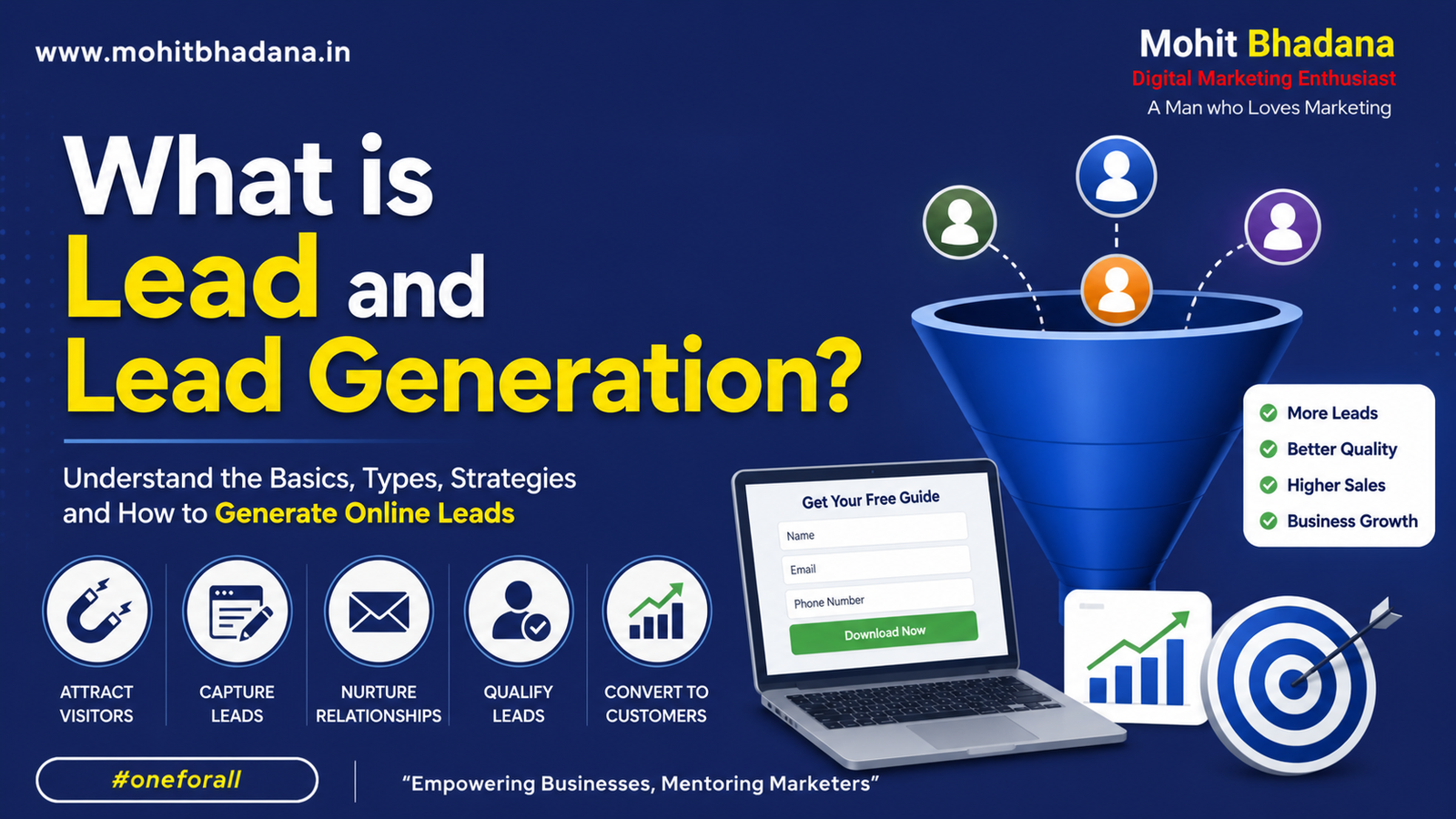
What is a Lead and Lead Generation?
Blog Summary A lead is a person who shows interest in your business by sharing their contact information, while lead generation is the process of attracting and converting potential customers into leads. Understanding the different types of leads, cold, warm, and hot, helps you tailor your marketing strategy effectively. By using proven methods like lead magnets, landing pages, paid ads, webinars, and SEO, businesses can consistently generate high-quality online leads. The key to success lies in offering value, capturing data, nurturing relationships, and converting leads into customers. What is a Lead? A lead is any person who shows interest in your product or service by sharing their contact details, such as their name, email address, or phone number. Unlike a random visitor, a lead has taken action—this could be: Visitor vs Lead vs Customer Understanding this difference is crucial: In simple terms:Not every visitor is a lead—but every lead has potential to become a customer. Types of Leads in Digital Marketing Not all leads are equal. They are categorized based on their readiness to buy: 1. Cold Leads Strategy: Focus on awareness and value-based content 2. Warm Leads Strategy: Build trust through testimonials, case studies, and email nurturing 3. Hot Leads Strategy: Quick response and strong call-to-action (CTA) What is Lead Generation? Lead generation is the process of attracting potential customers and converting them into leads by offering value in exchange for their contact information. How Lead Generation Works (Simple Funnel) The process follows a structured journey: Stranger → Visitor → Lead → Customer Here’s how it works: The key formula:Give value → Capture contact → Build trust → Make the sale How to Generate Online Leads (Proven Methods) If you’re wondering how to generate online leads, here are the top 5 proven strategies: 1. Lead Magnets A lead magnet is a free resource offered in exchange for contact details. Examples: Why it works:People are more likely to share their information when they receive instant value. 2. Landing Pages A landing page is a dedicated page designed to convert visitors into leads. Key elements: Tip: Avoid distractions—focus on one goal only. 3. Paid Advertising (Meta & Google Ads) Paid ads help you generate leads quickly and at scale. Types: Benefit: You can target the right audience and collect leads directly. 4. Webinars & Online Events Webinars are one of the highest-converting lead generation methods. How it works: Strategy:Give 90% value, sell 10% 5. SEO & Blog Content Creating SEO-optimized blogs helps attract organic traffic. Example: This method builds long-term, sustainable lead flow. Real-World Lead Generation Examples 1. Free Tool Strategy Many SaaS companies, like Hubspot, semrush and Brand 24 offer free tools to capture leads. Users sign up and later convert into paying customers. Lesson:Provide real value upfront. 2. Discount Pop-Ups (E-commerce) Offering a discount in exchange for email captures leads instantly. Example:“Get 10% OFF on your first order.” Lesson:Right offer + right timing = high conversions 3. Webinar Funnel (Coaching Industry) Free masterclasses attract leads and convert them into high-ticket clients. Lesson:Teach first, sell later. Key Metrics to Track in Lead Generation To succeed, you must measure performance: What gets measured gets improved. Common Lead Generation Mistakes Avoid these: FAQs 1. What is a lead in digital marketing? A lead is a person who shows interest in your product or service by sharing their contact details, such as email or phone number. 2. What is lead generation? Lead generation is the process of attracting potential customers and collecting their contact information to convert them into buyers. 3. How to generate online leads quickly? You can generate online leads using paid ads, landing pages, lead magnets, webinars, and SEO-based content marketing. 4. What are the types of leads? The three main types are cold leads, warm leads, and hot leads, based on their readiness to purchase. 5. Why is lead generation important? Lead generation helps businesses build a pipeline of potential customers, increasing sales and long-term growth. Lead generation campaigns become more effective when you combine owned, earned, and paid media. Explore our guide on Types of Media in Digital Marketing. Mohit BhadanaDigital Marketing Strategist , Consultant & Trainer mohitbhadana.in
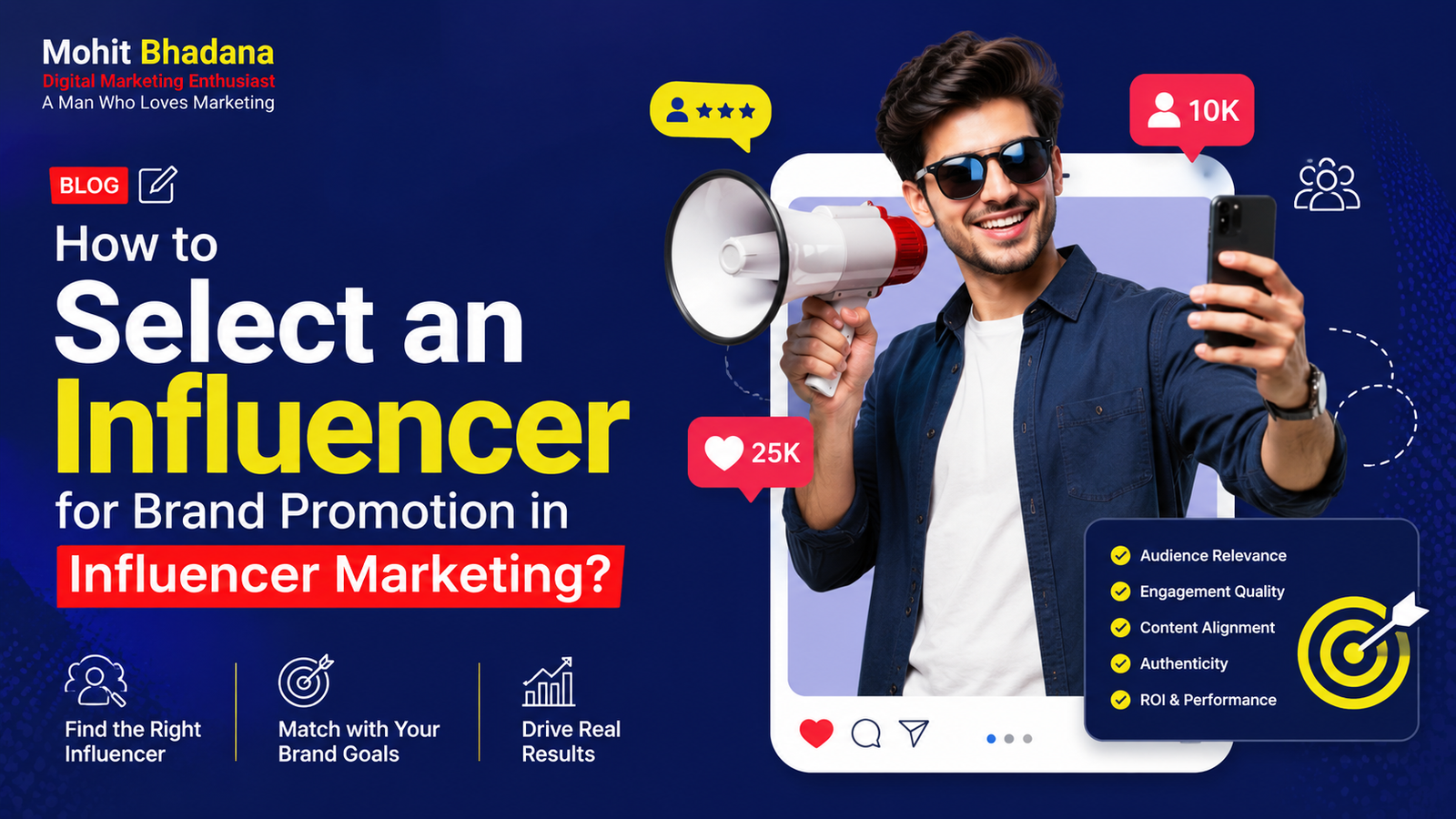
How to Select an Influencer for Brand Promotion in Influencer Marketing?
Blog Summary Choosing the right influencer is one of the most important factors in the success of an influencer marketing campaign. This guide explains what influencer marketing is, how it works, and the step-by-step process for selecting an influencer who aligns with your brand, target audience, and marketing objectives. You’ll learn about the different types of influencers, the 4R framework (Relevance, Reach, Resonance, and Reliability), essential influencer metrics, media kits, rate cards, whitelisting, outreach templates, and real-world examples from leading Indian brands like boAt, Mamaearth, Zomato, Myntra, and CRED. Whether you’re a business owner, digital marketer, or student, this comprehensive guide will help you build successful influencer partnerships that drive brand awareness, engagement, and conversions. What is Influencer Marketing? Influencer marketing is a digital marketing strategy where brands collaborate with content creators or social media influencers to promote their products or services to an engaged audience. Instead of promoting directly through advertisements, brands leverage the trust and credibility that influencers have already built with their followers. The concept is based on social proof, where people are more likely to trust recommendations from individuals they follow than traditional advertisements. For example: Why Influencer Marketing Works Influencer marketing has become popular because it delivers benefits that traditional advertising often cannot. Some major advantages include: When an influencer genuinely recommends a product, their audience perceives it as personal advice rather than a paid advertisement. Types of Influencers Influencers are generally categorized by their follower count. Influencer Type Followers Best For Nano Influencer 1K – 10K Local businesses and niche communities Micro Influencer 10K – 100K High engagement and conversions Macro Influencer 100K – 1 Million Brand awareness Mega Influencer 1 Million+ National campaigns and product launches Generally, micro influencers offer higher engagement and better ROI than celebrity influencers. How to Select an Influencer for Brand Promotion Selecting an influencer should never be based only on follower count. A better approach is to evaluate creators using the 4R Framework. 1. Relevance Ask yourself: For example: If you’re promoting a protein supplement, partnering with a fitness creator makes far more sense than collaborating with a travel influencer. Example: MuscleBlaze regularly collaborates with fitness coaches and gym creators instead of lifestyle influencers. 2. Reach Reach refers to the number of unique people an influencer can actually expose your brand to. Remember: A creator with 50,000 highly active followers can often outperform someone with 500,000 inactive followers. Instead of looking only at followers, evaluate: 3. Resonance Resonance measures how strongly an audience interacts with content. A high-quality influencer generates: This is usually measured using the Engagement Rate (ER). Formula: Engagement Rate = (Likes + Comments) ÷ Followers × 100 A creator with a 6% engagement rate is often more valuable than one with 2 million followers and very little interaction. 4. Reliability Professional influencers consistently: Brands should always evaluate an influencer’s previous collaborations before signing a campaign. Additional Factors to Consider Before Hiring an Influencer Audience Demographics Analyze whether the influencer’s audience matches your business. Consider: For example: If your business serves Indian customers, partnering with creators whose audience is primarily in the United States may not produce strong results. Content Quality Review at least 20–30 recent posts. Check for: The influencer’s content should naturally align with your brand image. Brand Values Avoid influencers who frequently promote unrelated products or engage in controversial activities. Your brand reputation is closely tied to the people representing it. Previous Brand Collaborations Review brands they’ve worked with. For example: If a skincare creator has promoted five competing skincare brands in one month, their recommendations may appear less authentic. How to Find the Right Influencers Some effective methods include: Real Indian Brand Examples boAt boAt collaborates extensively with technology YouTubers and lifestyle creators to showcase new earphones, headphones, and smartwatches. Instead of relying only on celebrities, the brand consistently works with micro and macro creators who review products in detail. Mamaearth Mamaearth built significant brand awareness through beauty creators and parenting influencers on Instagram and YouTube. Product demonstrations and skincare routines helped establish trust among potential buyers. Zomato Zomato frequently partners with food bloggers and city-based creators who review restaurants, showcase food festivals, and promote offers through Instagram Reels. These collaborations generate authentic content while reaching highly relevant audiences. CRED CRED combines celebrity endorsements with digital creators to build premium brand perception. Its campaigns often feature creators who align with finance, entrepreneurship, and premium lifestyle content. Myntra During festive sales, Myntra collaborates with fashion influencers to showcase outfit ideas, styling tips, and exclusive discount campaigns. This strategy helps increase both app downloads and purchases. Common Mistakes to Avoid Many brands fail because they: Best Practices for Successful Influencer Campaigns Before launching a campaign: Long-term collaborations often create stronger brand recall than one-off sponsored posts. Conclusion Influencer marketing is no longer limited to celebrities. Today, brands achieve better results by partnering with creators who have engaged communities and genuine influence. The right influencer isn’t always the one with the highest follower count—it’s the one whose audience trusts their recommendations and aligns with your target market. By evaluating creators using the 4R Framework (Relevance, Reach, Resonance, and Reliability), analyzing audience quality, and focusing on authentic partnerships, businesses can create campaigns that build trust, generate engagement, and drive measurable business growth. Frequently Asked Questions 1. What is influencer marketing? Influencer marketing is a strategy where brands collaborate with content creators to promote products or services to their engaged audience. 2. How do I choose the right influencer for my brand? Evaluate influencers based on relevance, audience demographics, engagement rate, content quality, and reliability instead of follower count alone. 3. Which type of influencer is best for small businesses? Micro influencers (10K–100K followers) often provide the best balance of engagement, affordability, and conversions. 4. Why is engagement rate more important than followers? A high engagement rate indicates that an influencer’s audience actively interacts with their content, making campaigns more effective. 5. What is a media kit in influencer marketing? A media kit is a document
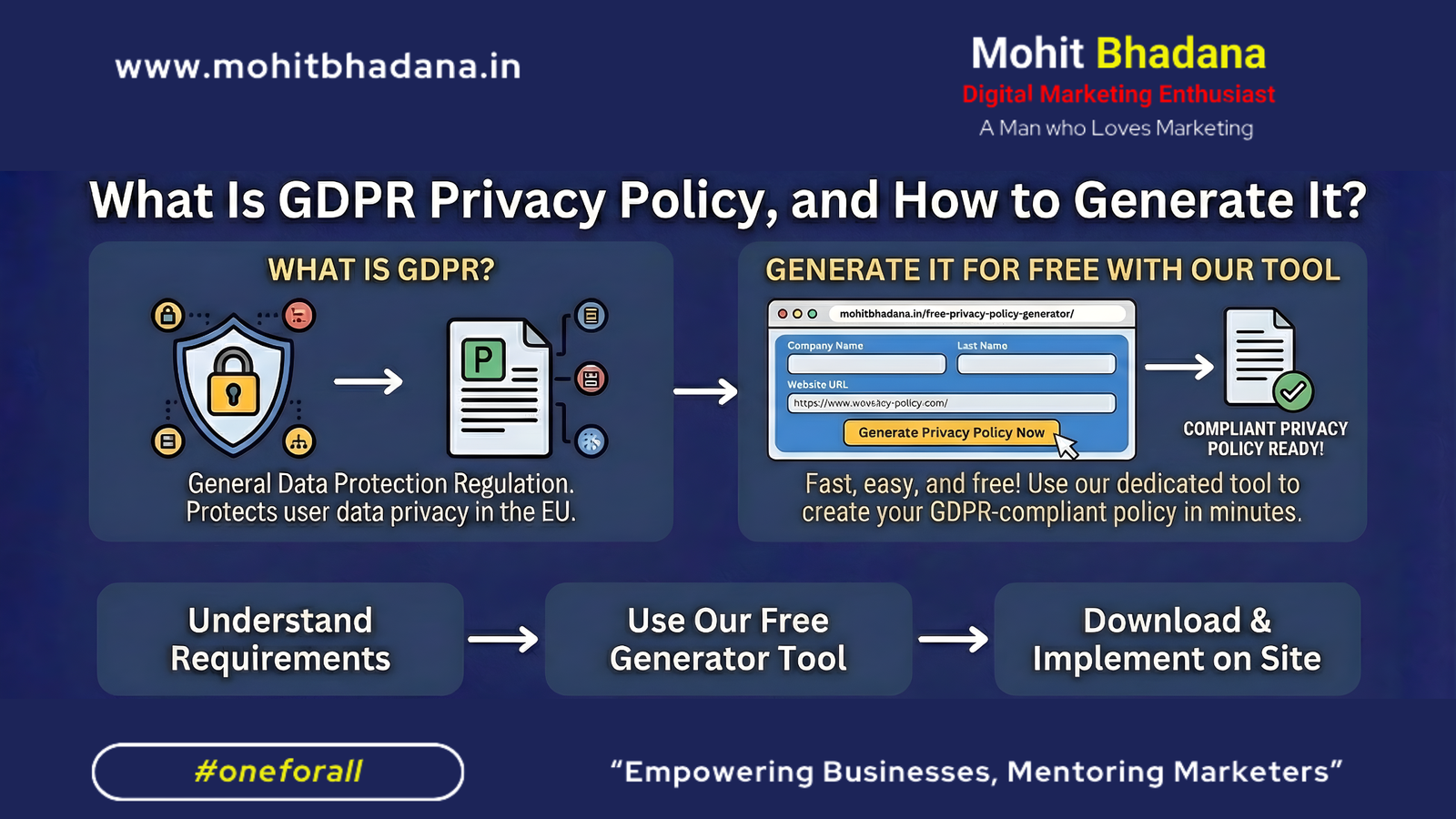
What is GDPR Privacy Policy and How to Generate It?
Blog Summary This educational guide explains the meaning of GDPR Privacy Policy, why businesses need it, who it applies to, and the steps to generate a GDPR-compliant policy. You’ll also learn the essential components of a GDPR Privacy Policy and get access to a free online privacy policy generator. What Is GDPR Privacy Policy, and How to Generate It? If you run a website, app, or eCommerce store or collect any user data, you’ve probably heard of GDPR — a privacy regulation designed to protect user data and promote transparency. But what does GDPR Privacy Policy actually mean?Why do websites need it?And most importantly, how can you quickly generate a GDPR-ready privacy policy without legal knowledge? Let’s break it down in a simple and educational manner. What Is GDPR? (General Data Protection Regulation) GDPR is a data protection law created by the European Union (EU) to safeguard users’ personal data. It became effective on May 25, 2018, and applies to: This means even if you are in India, the USA, or any non-EU country, GDPR applies if your website gets EU visitors. What Is a GDPR Privacy Policy? A GDPR Privacy Policy is a legally required document that explains: This policy helps build trust, transparency, and legal protection for your business. Why Is a GDPR Privacy Policy Important? Here are the key reasons: 1. Legal Compliance If you receive EU traffic, a GDPR-compliant privacy policy is mandatory. 2. User Transparency Users should know exactly how their information is handled. 3. Avoid Legal Penalties GDPR violations can result in fines up to €20 million or 4% of global revenue. 4. Trust, Credibility & SEO Search engines favour websites with proper legal pages. What Should a GDPR Privacy Policy Include? To meet GDPR standards, your privacy policy must cover: Data You Collect Examples: Why You Collect It (Purpose) Examples: How You Process and Store Data Explain storage, encryption, and data retention duration. Third-Party Sharing List tools like: User Rights Under GDPR Such as: Cookies & Tracking Technologies Must disclose usage. Contact Information Users should know how to contact the data controller. Creating this manually can be time-consuming — but there’s an easier way. How to Generate a GDPR Privacy Policy Easily You don’t need legal expertise. You just need to provide basic business info. Here’s the easiest way to create one: 👉 Use My Free Privacy Policy Generator Tool I built a simple, fast, and accurate generator for creators, marketers, and business owners: 🔗 https://mohitbhadana.in/free-privacy-policy-generator/ Just enter your: And the tool generates a GDPR-friendly Privacy Policy instantly. Perfect for:✔ Websites✔ Blogs✔ Apps✔ SaaS tools✔ Shopify/WordPress stores Educational Example: GDPR in Real Life Imagine you run a digital marketing blog and collect emails for newsletters. According to GDPR, you must clearly explain: A GDPR Privacy Policy ensures all this is documented properly. Benefits of Using a GDPR-Ready Privacy Policy Tips for Maintaining GDPR Compliance ✔ Use SSL (HTTPS)✔ Add a cookie consent banner✔ Avoid collecting unnecessary data✔ Allow users to delete data✔ Update your privacy policy when needed Conclusion A GDPR Privacy Policy is more than a legal requirement — it is a commitment to transparency and responsible data handling. Whether you’re a creator, marketer, or business owner, having a proper policy protects both your users and your brand. And instead of writing one from scratch… 👉 Use this tool to generate a GDPR-compliant privacy policy instantly: 🔗 https://mohitbhadana.in/free-privacy-policy-generator/ Easy. Fast. Free. FAQs 1. What is a GDPR Privacy Policy? A GDPR Privacy Policy is a legal document that explains how your website collects, uses, stores, and protects the personal data of EU users. 2. Who needs GDPR compliance? Any business that processes data of EU residents, even if the business is outside the EU. 3. How do I generate a GDPR Privacy Policy? Use an online generator like this one:🔗 Free Privacy Policy Generator https://mohitbhadana.in/free-privacy-policy-generator/ 4. What data is covered under GDPR? Any information that identifies a person: emails, IP addresses, names, device IDs, etc. 5. Is a privacy policy required for Google Ads or Facebook Ads? Yes! Both platforms require an accessible privacy policy page. 6. Is using a generator enough for GDPR compliance? A generator helps create the required legal text, but you must also follow GDPR practices (cookie consent, data protection, etc.) Mohit BhadanaDigital Marketing Strategist , Consultant & Trainer mohitbhadana.in
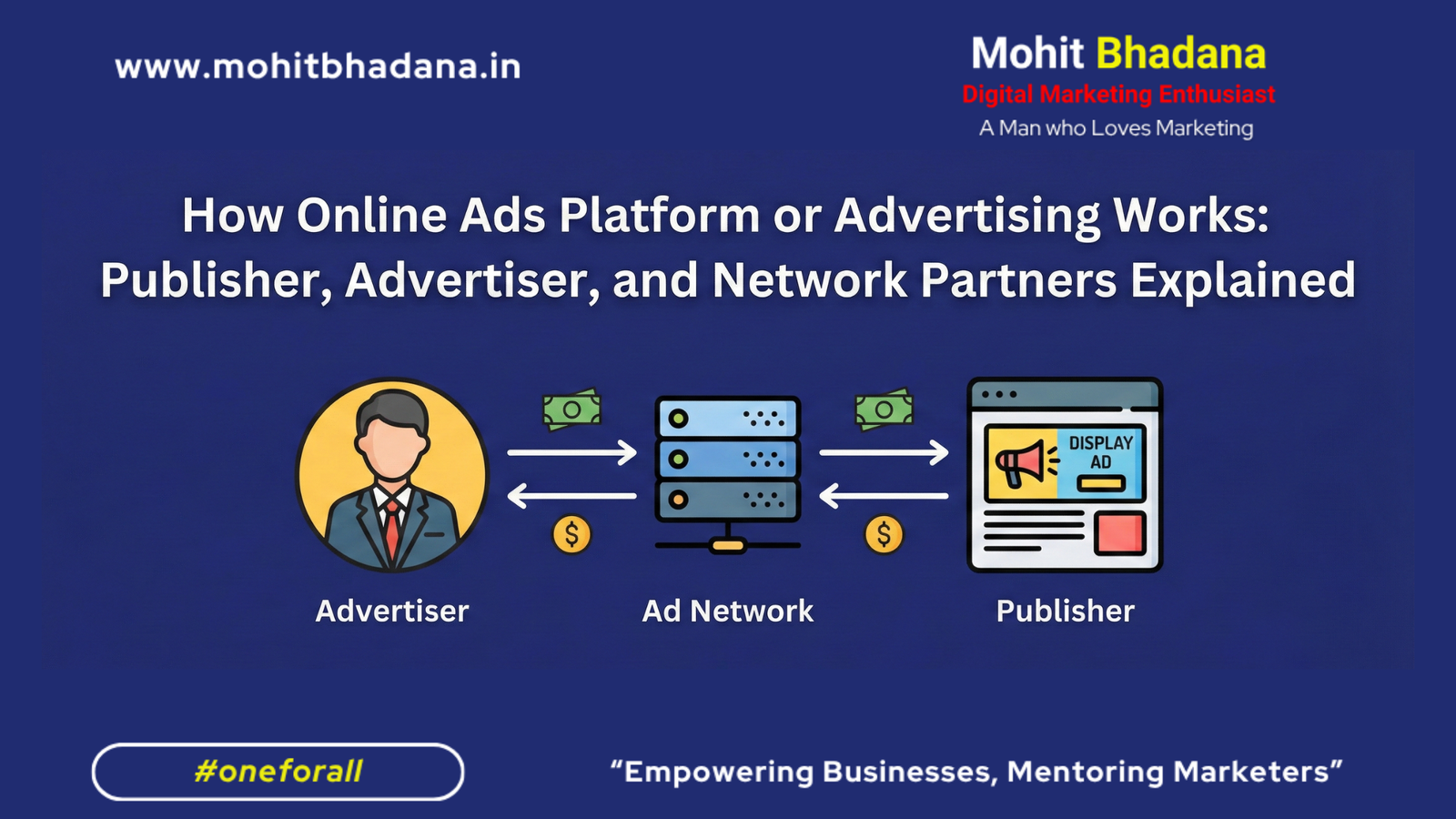
How Online Ads Platform or Advertising Works: Publisher, Advertiser, and Network Partners Explained
Blog summary This article explains how online advertising platforms work by breaking down the roles of advertisers, publishers, and network partners. It covers how ads are created, matched, and delivered to users through ad networks, the step-by-step ad delivery process, and how platforms like Google AdSense monetize websites such as MohitBhadana.in. A practical guide for marketers, students, and business owners who want to understand the digital advertising ecosystem clearly. To understand how online ad platforms or advertising works, we must first explore how these entities interact to deliver targeted ads to users in real time. 1. Who Is the Advertiser? The advertiser is the business, brand, or agency that wants to promote a product or service. They spend money to buy ad placements across digital properties. Examples of advertisers: The advertiser defines: Goal of the advertiser: Get conversions, leads, app downloads, or brand awareness. 2. Who Is the Publisher? The publisher is the owner of a digital property (website, app, or platform) where ads are shown. Publishers earn revenue by allowing ads to appear on their website. A real example of a publisher: mohitbhadana.in runs Google AdSense and displays banner ads across its pages. When users browse the blog or tools pages, ads appear and generate revenue for the publisher based on impressions or clicks. Publishers monetize their traffic using: Goal of the publisher: Maximize their earnings by increasing traffic and engagement on the site. 3. Role of Network Partners (Ad Networks & Ad Exchanges) Ad networks and ad exchanges sit between advertisers and publishers. Their job is to match the advertiser’s audience requirements with the publisher’s available ad space. Popular ad networks: How network partners work: Goal of the ad network: Ensure both publishers and advertisers achieve optimal results. 4. How the Online Ads Platform Works (Step-by-Step Process) Why This Model Works Effectively Entity Major Benefit Advertiser Gets targeted audience and measurable results Publisher Earns revenue by monetizing traffic Network Partner Makes a commission on each transaction Real Case Summary This complete ecosystem ensures win-win outcomes for all three parties. FAQs 1. What is the difference between an advertiser and a publisher? The advertiser pays to run ads for marketing purposes, while the publisher earns money by displaying ads on their website or app. 2. Can a website be both advertiser and publisher? Yes. A website can advertise its products on other platforms and also display paid ads to earn income. 3. How do publishers get paid? Publishers are paid through CPC (Cost Per Click), CPM (Cost Per Thousand Impressions), or CPA, depending on the ad network and campaign type. 4. Do publishers need high traffic to earn from AdSense? Higher traffic results in higher earnings, but even niche blogs with moderate traffic can earn well if their audience is relevant. 5. Is online advertising cost-effective for businesses? Yes. Unlike traditional ads, online advertising offers precise targeting, measurable results, and better ROI. Mohit BhadanaDigital Marketing Strategist , Consultant & Trainer mohitbhadana.in

What Is the Keyword Match Type in Google Ads? (Educational Guide)
Blog Summary This educational guide explains the concept of Keyword Match Type in Google Ads, including Exact Match, Phrase Match, and Broad Match. You’ll learn how each match type works, how it impacts ad performance, and how to choose the right one. Includes examples using [ ], ” ” and broad formats — plus a link to a free tool that instantly generates all three match types. What Is the Keyword Match Type in Google Ads? When you run Google Ads, selecting good keywords is only half the job. To ensure your ads appear for the right searches, you need to understand Keyword Match Type, a setting that controls how close a user’s search query must be to your keyword before Google shows your ad. Think of match types as classroom filters: These filters in Google Ads are called: Let’s explore each one in a clear, student-friendly way. 1. Exact Match – The Most Controlled Match Type Notation: [keyword] Exact Match tells Google to show your ad only when the search query matches the meaning of your keyword very closely. Example: Keyword: [best running shoes] Your ad will show for queries like: But it won’t show for: When Should You Use Exact Match? 2. Phrase Match – Balanced & Intent-Focused Notation: “keyword” Phrase Match allows your ad to show when a user’s search includes the meaning of your keyword, with additional words before or after. Example: Keyword: “digital marketing course” Your ad may show for: But NOT for: When Should You Use Phrase Match? 3. Broad Match – The Widest, Intent-Based Match Type Notation: keyword (no symbols) Broad Match gives Google the freedom to show your ads to related searches, synonyms, variations, and intent-based keywords. Example: Keyword: car insurance Google may show your ad for: When Should You Use Broad Match? Comparison Table — Which Match Type Should You Choose? Match Type Reach Control Relevance CPC Best For Exact [ ] Low High Very High Low–Medium High-intent leads Phrase “ ” Medium Medium High Medium General targeting Broad High Low Medium High (if unmanaged) Discovery & scaling How to Choose the Right Keyword Match Type (Educational Strategy) For beginners: Start with Phrase Match → It offers the safest balance. For lead generation: Use Exact Match + Phrase Match. For large-scale growth: Use Broad Match + smart bidding + strong negatives. For research: Use Broad Match to discover new keywords via the Search Terms Report. Use the Google keyword planner tool to do the keyword research. Want to Generate All Match Types Instantly? Manually adding [ ], ” “, and broad formats for dozens of keywords can be time-consuming.So I built an easy, one-click tool: 👉 Free Keyword Match Type Tool for Google Ads https://mohitbhadana.in/free-keyword-match-type-tools-for-google-ads/ Just paste your keyword → Get Exact, Phrase, and Broad instantly. This tool is perfect for:✔️ Digital marketers✔️ PPC specialists✔️ Students learning Google Ads✔️ Agencies managing large accounts Real-Life Examples to Make It Even Clearer Example Keyword: digital marketing course Match Type Example Input Search Queries Triggered Exact Match [digital marketing course] digital marketing course Phrase Match “digital marketing course” best digital marketing course, online digital marketing course Broad Match digital marketing course marketing course online, learn digital skills Pro Tip: Always Use Negative Keywords Negative keywords prevent irrelevant clicks. Example:Keyword: “digital marketing course”Negative keyword: free This blocks searches like: Result: better leads, less wastage. Conclusion Understanding Keyword Match Types in Google Ads is essential for building smarter, more cost-efficient campaigns. By mastering Exact Match, Phrase Match, and Broad Match, you’ll:✔️ Spend your budget wisely✔️ reach the right audience✔️ improve conversions✔️ reduce irrelevant clicks And to make your workflow smoother, don’t forget to use:👉 Free Keyword Match Type Generator https://mohitbhadana.in/free-keyword-match-type-tools-for-google-ads/ FAQs 1. What is a keyword match type in Google Ads? It’s a setting that determines how closely a user’s search must match your keyword for your ad to appear. 2. What is Exact Match? Exact Match [keyword] triggers ads only when the search closely matches the keyword’s meaning. 3. What is Phrase Match? Phrase Match “keyword” shows ads when the search includes the meaning of your keyword with extra words before or after. 4. What is Broad Match? Broad Match triggers ads for related terms, synonyms, and intent-based searches. 5. Which match type is best for beginners? Phrase Match — because it’s balanced and safer. 6. Do I need negative keywords? Yes! Negative keywords prevent irrelevant traffic and save budget. Want to Learn more about Google Ads? Check the Google Ads mindmap on My Digital Marketing Notes Mohit BhadanaDigital Marketing Strategist , Consultant & Trainer mohitbhadana.in

What Is the Halo Effect in Marketing? Meaning, Examples, and Applications for Brand Growth
Blog Summary The Halo Effect in marketing is a psychological bias where customers transfer their positive perception of one aspect of a brand to its entire product line. It influences purchasing decisions, brand loyalty, pricing power, and long-term customer relationships. Brands like Apple, Nike, and Google apply the Halo Effect extremely well, but small businesses can also leverage it by creating standout products, emphasising social proof, and maintaining strong branding. When used strategically, the Halo Effect becomes a powerful engine for business growth. What Is the Halo Effect in Marketing? The Halo Effect in marketing refers to a cognitive bias in which customers develop an overall positive perception of a brand, product, or individual based on one strong positive characteristic. Once that perception is formed, it extends to other areas of the brand—even if the customer has never experienced them. In simple terms: If customers like one thing about a brand, they are more likely to assume that everything from the same brand is good. This psychological effect becomes a powerful driver of trust, brand loyalty, and consumer spending. How the Halo Effect Influences Purchasing Decisions The Halo Effect works effortlessly in the minds of consumers: This is one of the reasons: Examples of the Halo Effect in Marketing To fully understand how powerful this effect is, here are practical examples: 1. Apple Apple built a reputation for innovation and product quality through the iPhone. As a result, customers trust MacBook, Apple Watch, and AirPods even before trying them. The strong brand reputation creates a Halo around its entire product ecosystem. 2. Nike Nike’s association with world-class athletes (Michael Jordan, Cristiano Ronaldo, Serena Williams) creates an impression that its products represent performance and success. Customers assume Nike shoes and apparel will make them “perform better.” 3. Google People trust Google’s search engine, so they automatically trust products like Gmail, Google Drive, Google Photos, and Google Maps—even before experiencing them. 4. Influencer Marketing or Influencer-Founded Brand When consumers admire a public figure, they begin to trust the brands that the individual endorses. This is why influencer-led campaigns convert strongly. For Example – Gourav Taneja aka Flying Beast’s Brand – Beast Life How Brands Apply the Halo Effect in Marketing Smart brands leverage the Halo Effect in multiple ways: 1. Lead with the Star Product Brands highlight their best-performing product to build a strong market reputation. When that product earns trust, customers naturally try other offerings. 2. Celebrity or Influencer Endorsements By associating with someone the audience already admires, brands borrow instant credibility. 3. Premium Packaging and Design When customers see beautiful packaging, they assume the product quality is also high. 4. Social Proof Customer reviews, awards, certifications, and ratings create trust that extends across all brand offerings. 5. Brand Consistency Consistent messaging, logo, typography, colour palette, website experience—all reinforce a positive mental image. Advantages of the Halo Effect in Marketing Benefit Why It Matters Builds immediate trust Shortens the sales cycle Increases brand loyalty Encourages long-term repeat purchase Boosts conversion rates Customers try more products without hesitation Allows premium pricing Customer perception reduces price sensitivity Enhances marketing efficiency Less effort is required to convince returning customers Potential Downsides of the Halo Effect Although beneficial, the Halo Effect can also backfire if not managed properly: Brands must ensure consistent performance and value across all offerings to maintain the positive Halo. Why the Halo Effect Works: The Psychology Behind It The human brain prefers mental shortcuts to process information. Rather than evaluating every product feature logically, people rely on emotional impressions and past experiences. Key psychological triggers of the Halo Effect: The more a brand strengthens these triggers, the more powerful the Halo becomes. How Small Businesses Can Use the Halo Effect Even businesses with limited budgets can implement the Halo Effect successfully with strategies like: The goal is to build one core strength that can amplify the entire brand perception. FAQs 1. What is the Halo Effect in marketing? It is a psychological bias where consumers form a positive impression of a brand based on a single strong characteristic, which influences their buying decisions about other products. 2. Why is the Halo Effect important for brands? It builds trust, increases customer loyalty, improves conversion rates, and encourages customers to try multiple products from the same brand. 3. Can small businesses use the Halo Effect? Yes. They can use strong branding, social proof, influencer credibility, and consistent quality to build a positive perception. 4. Can the Halo Effect be negative? Yes. If a main product performs poorly, negative opinions can quickly spread across the entire brand 5. Is the Halo Effect relevant in digital marketing? Absolutely. Online reviews, influencer content, branding consistency, and product visuals play a major role in shaping consumer perception. Learn more about Marketing and Digital Advertising – Read more – What is marketing and 7Ps & 4C of Marketing? What is Digital marketing and its types? Mohit BhadanaDigital Marketing Strategist , Consultant & Trainer mohitbhadana.in

What Is Schema Markup in SEO & How to Generate It? (101 Guide)
Blog Summary This educational guide explains schema markup, how it helps search engines understand your content, and how to generate schema markup for websites. It covers different schema types, real examples, SEO benefits, and provides an easy link to generate schema via a free tool. What Is Schema Markup in SEO & How to Generate It? (101 Guide) If you want better rankings, rich snippets, and higher click-through rates, then Schema Markup is one of the most important things you can add to your website. Yet many beginners and even experienced marketers avoid schema because it feels “technical.” This guide breaks it down in a simple, educational way — and by the end, you’ll know what schema markup is, why it matters, and how to generate it in minutes using a free tool. What Is Schema Markup? (Simple Definition) Schema markup is a form of structured data added to a webpage that helps search engines understand your content more clearly. Think of a schema as a label for your content. Search engines like Google can read your webpage, but schema tells Google: By providing this extra context, search engines display better and more detailed search results known as rich snippets. Why Is Schema Markup Important for SEO? Schema markup helps your SEO in multiple ways: 1. Rich Snippets Adds extra information (ratings, prices, FAQs, product details). 2. Better CTR (Click-Through Rates) More detailed results attract more clicks. 3. Clear Understanding for Search Engines Google understands your content better → better indexing & ranking. 4. Voice Search Optimization Google Assistant, Siri, and Alexa rely heavily on structured data. 5. Essential for Local SEO Business hours, reviews, address, service area — all shown via schema. Schema isn’t optional anymore — it’s a must-have SEO element. Types of Schema Markup You Should Know Schema markup follows a globally recognized vocabulary maintained by Schema.org. If you want to learn the complete schema structure and JSON-LD types in detail, check the official resource here: Schema.org Official Structured Data Standard Here are the most common types used in SEO: 1. Article Schema For blogs, news, and educational content. 2. Product Schema For eCommerce product pages. 3. FAQ Schema For frequently asked questions blocks. 4. Local Business Schema For small businesses (salons, restaurants, stores). 5. Review Schema Adds ratings in SERPs. 6. Event Schema For webinars, concerts, and launches. 7. Person / Organization Schema For personal branding or company pages. 8. Breadcrumb Schema Shows path navigation in search results. Manually writing JSON-LD code for these is technical… So here’s the easiest way. How to Generate Schema Markup (Easiest Method) You don’t need coding skills.You don’t need SEO expertise.You just need a simple tool. Use My Free Schema Markup Generator Tool I created a free and easy tool that generates a schema for any webpage: Free schema markup generator by Mohit bhadana Just choose your schema type → fill in the fields → copy the JSON-LD code → paste into your site. Perfect for: ✔ Bloggers✔ SEO beginners✔ Agencies✔ WordPress websites✔ eCommerce stores Example: Schema Markup in Action Imagine you run a blog and publish an article titled: “10 Best Places to Travel in India” Without schema, Google only sees text.With schema, you can tell Google: { “@type”: “Article”, “headline”: “10 Best Places to Travel in India”, “author”: “Your Name”, “datePublished”: “2025-01-01” } This helps Google: ✔ Understand your article✔ Display it better✔ Increase click-through rates This is exactly why schema matters! Where Should You Add Schema Code? Depending on your platform: WordPress Paste the JSON-LD into a Header/Footer script plugin or inside the page HTML, or you can use the Header Footer code manager plugin. Shopify Add to theme.liquid or individual product templates. Custom Website Insert inside <script type=”application/ld+json”>. No Coding Skills? Use page builders like Elementor → HTML widget. Benefits of Using Schema Markup If you want your website to look professional and authoritative in Google results, schema is essential. Generate Your Schema Markup in Seconds Instead of spending hours writing code, use this free tool: Free Schema Markup Generator Fast. Easy. Beginner-friendly. FAQs (Schema Markup) 1. What is Schema Markup in SEO? Schema markup is structured data that helps search engines understand your webpage clearly and show rich results. 2. How can I generate schema markup easily? You can use this free online tool to generate JSON-LD schema in minutes:🔗 https://mohitbhadana.in/free-schema-generator/ 3. Do I need coding knowledge for schema markup? No. Schema tools automatically create the code for you. 4. Does schema improve SEO rankings? Schema itself doesn’t guarantee rankings but significantly improves visibility, CTR, and content clarity — which boosts SEO results. 5. Is schema markup required for every webpage? Not mandatory, but highly recommended for: 6. How do I test if my schema markup works? Use Google’s Rich Results Test to validate your code. Mohit BhadanaDigital Marketing Strategist , Consultant & Trainer mohitbhadana.in
Why Hostinger Is the Best Web Hosting for Digital Marketers
Blog Summary Choosing the right hosting is crucial for every digital marketer. A slow, unreliable website can ruin campaigns and SEO rankings. This blog explains why Hostinger stands out as the best web hosting for digital marketers, covering speed, uptime, SEO features, and pricing that help you scale your online presence with confidence Why Hostinger Is the Best Web Hosting for Digital Marketers Digital marketers live and breathe performance. Whether you’re running ads, building funnels, optimizing SEO, or scaling eCommerce campaigns, your hosting provider can make or break your success. If your website loads slowly, crashes during traffic spikes, or limits integrations, you lose visitors, conversions, and trust. That’s where Hostinger shines. It’s not just a hosting company — it’s a performance partner built for modern marketers. 1. Blazing Speed & High Performance Page speed is more than just a technical metric — it’s a marketing necessity. Fast websites mean better user experience, higher ad Quality Scores, and improved SEO rankings. Hostinger’s infrastructure runs on LiteSpeed servers and NVMe SSD storage, giving websites up to 3x faster loading times than traditional hosting providers. Why It Matters for Digital Marketers: Example: Running a Google Ads campaign? Hostinger ensures your landing pages load in under 2 seconds — boosting conversions and ad ROI. 2. Reliable Uptime & Security Downtime is a marketer’s nightmare. Imagine launching a Facebook campaign, and your website goes offline mid-conversion — lost clicks, wasted ad budget, and frustrated users. Hostinger guarantees 99.9% uptime and uses advanced security layers, including Cloudflare CDN, DDoS protection, and automated daily backups. Marketer Benefit: 3. Built-In Marketing & SEO Tools One of the biggest advantages of Hostinger is that it’s built with marketers in mind. Their dashboard includes: Why It’s a Game-Changer: Instead of juggling tools, you get an all-in-one marketing foundation — ready for blogging, funnel building, and analytics. 4. Scalability That Grows With You Every marketer starts small — but campaigns grow fast. Hostinger’s flexible plans make scaling easy. From shared hosting to cloud and VPS hosting, you can upgrade without migrating your website or losing data. Ideal For: Pro Tip: Start with Hostinger Business Web Hosting, then upgrade to Cloud Hosting as your traffic grows. 5. Affordable Pricing With Premium Features Hostinger offers one of the best price-to-performance ratios in the market. While many hosts charge extra for SSLs, daily backups, or CDN, Hostinger includes them for free in most plans. Example Pricing Snapshot: Marketer Takeaway: You get enterprise-grade speed and security without paying enterprise prices — a huge plus for agencies or freelancers managing tight budgets. 6. Global Reach for International Campaigns If you’re running ads or SEO campaigns targeting audiences outside India, Hostinger’s global data centres ensure fast loading times everywhere. With servers in the US, UK, India, Singapore, and Europe, you can host websites near your target audience — improving ad performance and user experience. Example: An Indian agency running campaigns in Dubai or the US can choose a nearby server region for minimal latency. 7. Exceptional Customer Support for Marketers When deadlines are tight and campaigns go live, you can’t wait 24 hours for a support ticket. Hostinger’s 24/7 live chat support is fast, knowledgeable, and perfect for marketers managing client projects. Real-World Scenario: Need to fix an SSL issue or migrate a website before a campaign launch? Hostinger’s team resolves most issues in under 10 minutes — saving hours of stress. Why Hostinger Stands Out Among Other Hosting Providers Feature Hostinger Competitor Average Speed LiteSpeed + NVMe SSD Standard SSD Uptime 99.9% 99.5% SSL & CDN Free Paid Add-ons AI Website Builder Included Rare Support 24/7 Live Chat Email-Only Pricing ₹69/mo ₹199+/mo In short, Hostinger offers premium-level performance at a fraction of the cost. Who Should Choose Hostinger? Hostinger is perfect for:✅ Digital marketers running ad campaigns and funnels✅ SEO experts managing multiple client websites✅ Bloggers and content creators who need fast load times✅ Small businesses and agencies scaling online It’s built for marketers who care about speed, reliability, and conversions. FAQs 1. Why is Hostinger the best web hosting for digital marketers? Hostinger combines speed, uptime, affordability, and SEO tools, making it ideal for campaign-driven websites that demand performance. 2. What makes Hostinger different from other web hosting providers? Unlike most hosts, Hostinger uses LiteSpeed technology, AI-powered tools, and global servers, offering faster and more reliable service for a lower cost. 3. Is Hostinger good for SEO? Yes! Hostinger’s fast servers, CDN, and free SSL help improve Core Web Vitals, which directly impacts SEO and organic rankings. 4. Can I host multiple websites on Hostinger? Absolutely. With the Premium or Business Plan, you can host multiple domains under one account — perfect for agencies or freelancers. 5. How secure is Hostinger? Hostinger provides Cloudflare protection, daily backups, and SSL encryption, ensuring your website and customer data remain secure. Want to learn more about web hosting and domains? Read these blogs Learn the basics of building your online identity in my guide on what a domain name is Understand the fundamentals of hosting with this quick guide on what web hosting is and its best types. Mohit BhadanaDigital Marketing Strategist , Consultant & Trainer mohitbhadana.in