Blog Summary
The Halo Effect in marketing is a psychological bias where customers transfer their positive perception of one aspect of a brand to its entire product line. It influences purchasing decisions, brand loyalty, pricing power, and long-term customer relationships. Brands like Apple, Nike, and Google apply the Halo Effect extremely well, but small businesses can also leverage it by creating standout products, emphasising social proof, and maintaining strong branding. When used strategically, the Halo Effect becomes a powerful engine for business growth.
What Is the Halo Effect in Marketing?
The Halo Effect in marketing refers to a cognitive bias in which customers develop an overall positive perception of a brand, product, or individual based on one strong positive characteristic. Once that perception is formed, it extends to other areas of the brand—even if the customer has never experienced them.
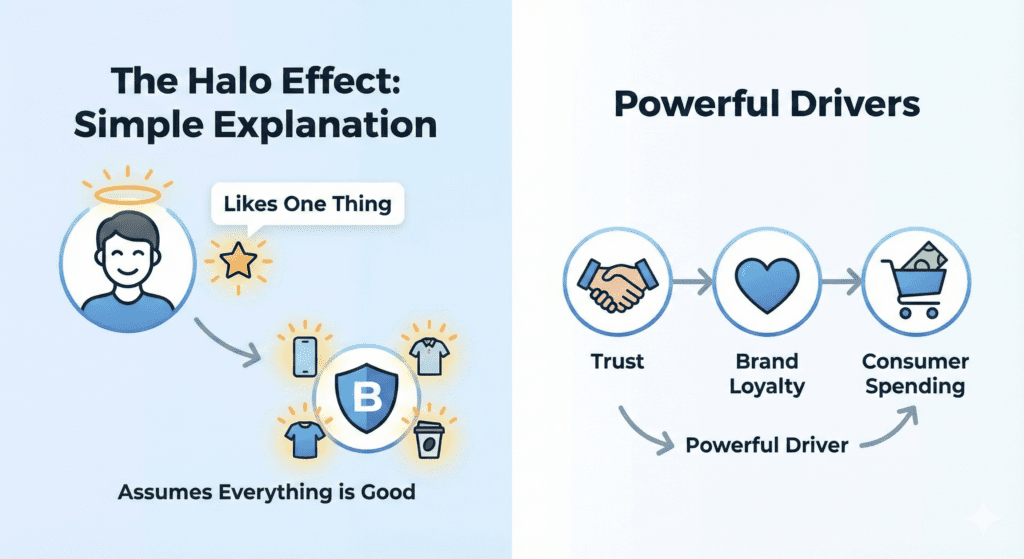
In simple terms:
If customers like one thing about a brand, they are more likely to assume that everything from the same brand is good.
This psychological effect becomes a powerful driver of trust, brand loyalty, and consumer spending.
How the Halo Effect Influences Purchasing Decisions
The Halo Effect works effortlessly in the minds of consumers:
- A customer has a positive experience with one product.
- This builds trust and emotional connection with the brand.
- The customer assumes other products from the same brand will perform similarly.
- The likelihood of repeat purchase increases
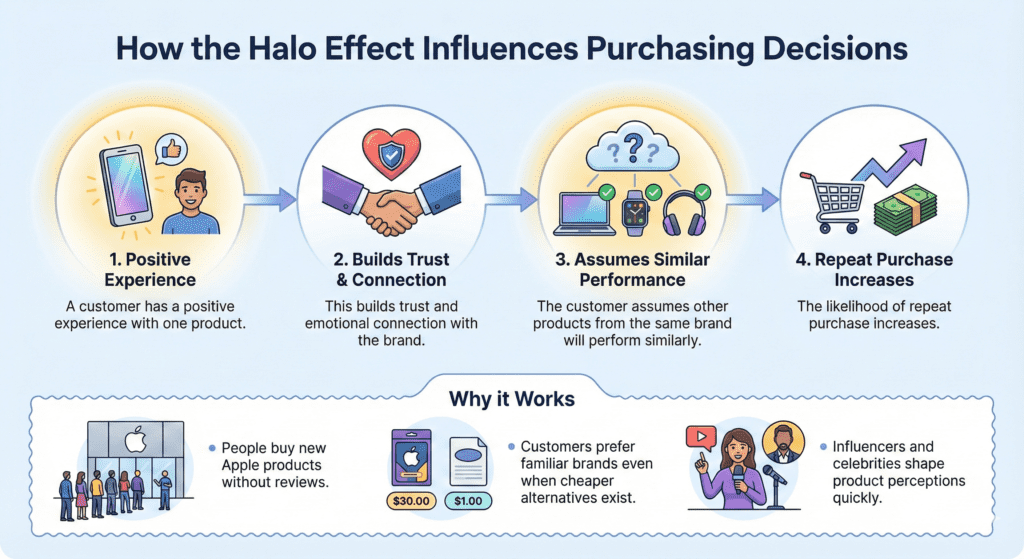
This is one of the reasons:
- People buy new products during Apple launches without reading reviews.
- Customers prefer familiar brands even when cheaper alternatives exist.
- Influencers and celebrities help shape product perceptions quickly.
Examples of the Halo Effect in Marketing
To fully understand how powerful this effect is, here are practical examples:
1. Apple
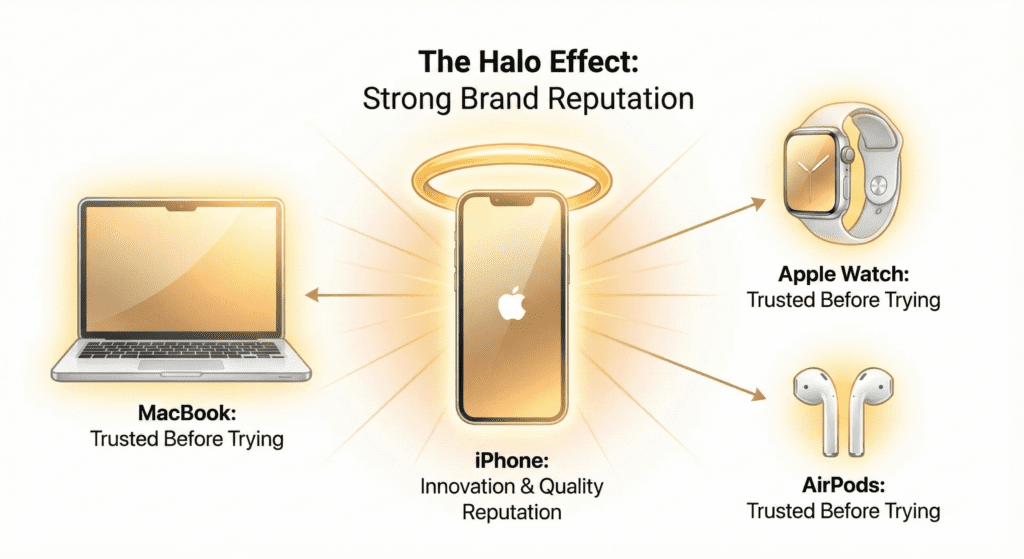
Apple built a reputation for innovation and product quality through the iPhone. As a result, customers trust MacBook, Apple Watch, and AirPods even before trying them. The strong brand reputation creates a Halo around its entire product ecosystem.
2. Nike
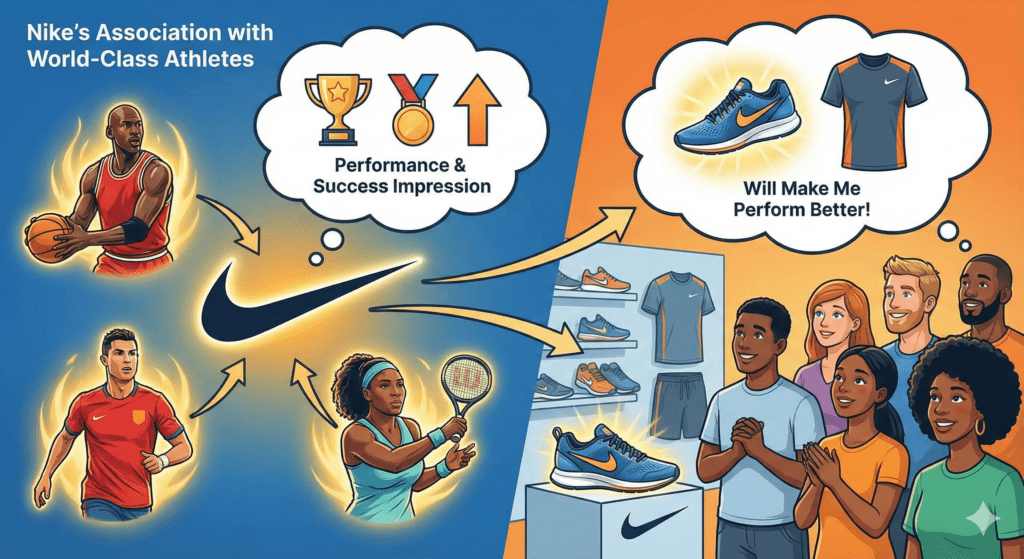
Nike’s association with world-class athletes (Michael Jordan, Cristiano Ronaldo, Serena Williams) creates an impression that its products represent performance and success. Customers assume Nike shoes and apparel will make them “perform better.”
3. Google
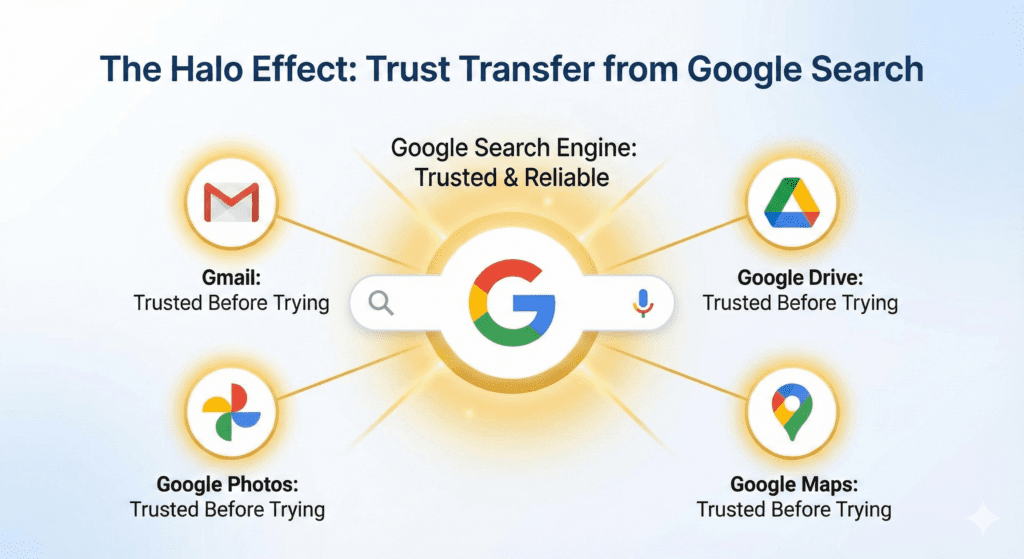
People trust Google’s search engine, so they automatically trust products like Gmail, Google Drive, Google Photos, and Google Maps—even before experiencing them.
4. Influencer Marketing or Influencer-Founded Brand
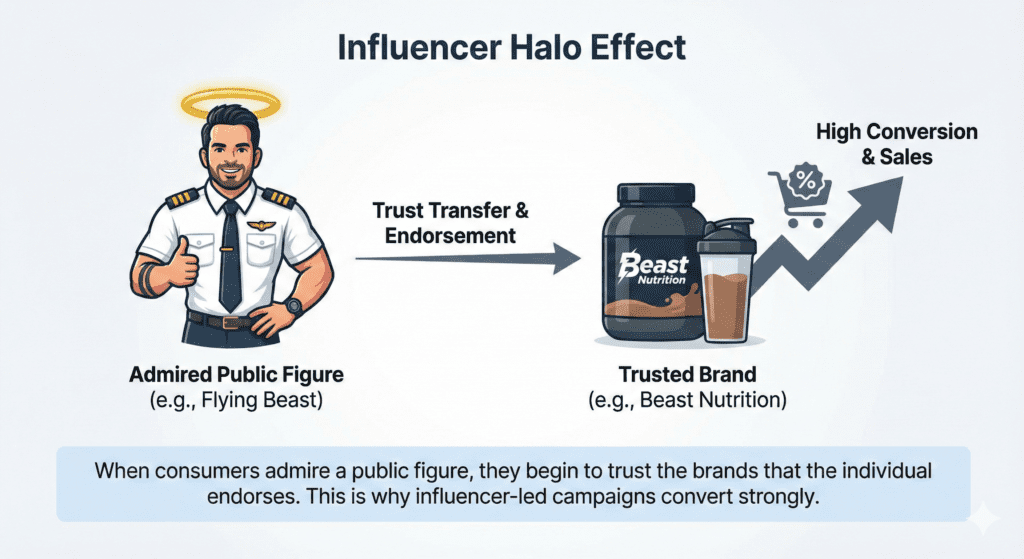
When consumers admire a public figure, they begin to trust the brands that the individual endorses. This is why influencer-led campaigns convert strongly.
For Example – Gourav Taneja aka Flying Beast’s Brand – Beast Life
How Brands Apply the Halo Effect in Marketing
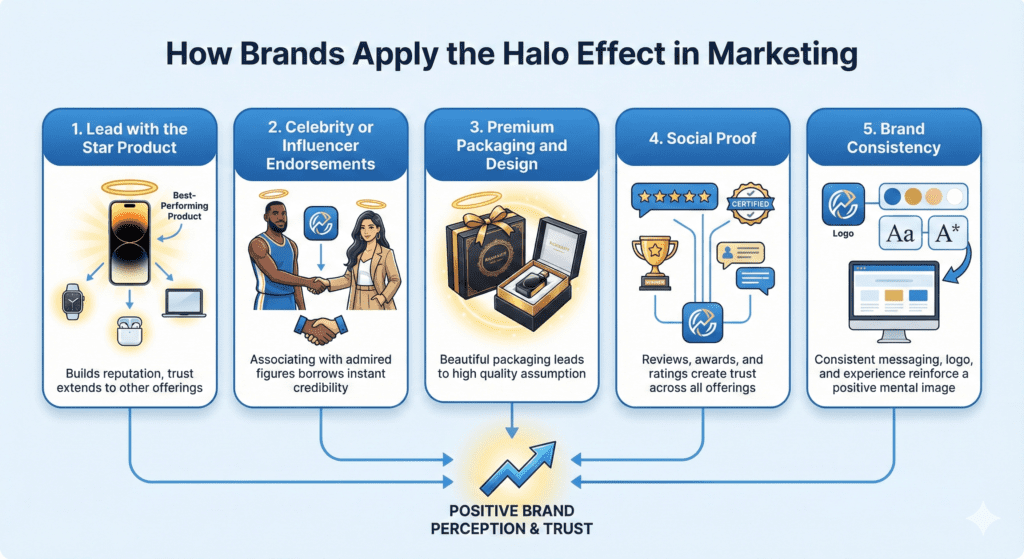
Smart brands leverage the Halo Effect in multiple ways:
1. Lead with the Star Product
Brands highlight their best-performing product to build a strong market reputation. When that product earns trust, customers naturally try other offerings.
2. Celebrity or Influencer Endorsements
By associating with someone the audience already admires, brands borrow instant credibility.
3. Premium Packaging and Design
When customers see beautiful packaging, they assume the product quality is also high.
4. Social Proof
Customer reviews, awards, certifications, and ratings create trust that extends across all brand offerings.
5. Brand Consistency
Consistent messaging, logo, typography, colour palette, website experience—all reinforce a positive mental image.
Advantages of the Halo Effect in Marketing
| Benefit | Why It Matters |
| Builds immediate trust | Shortens the sales cycle |
| Increases brand loyalty | Encourages long-term repeat purchase |
| Boosts conversion rates | Customers try more products without hesitation |
| Allows premium pricing | Customer perception reduces price sensitivity |
| Enhances marketing efficiency | Less effort is required to convince returning customers |
Potential Downsides of the Halo Effect
Although beneficial, the Halo Effect can also backfire if not managed properly:
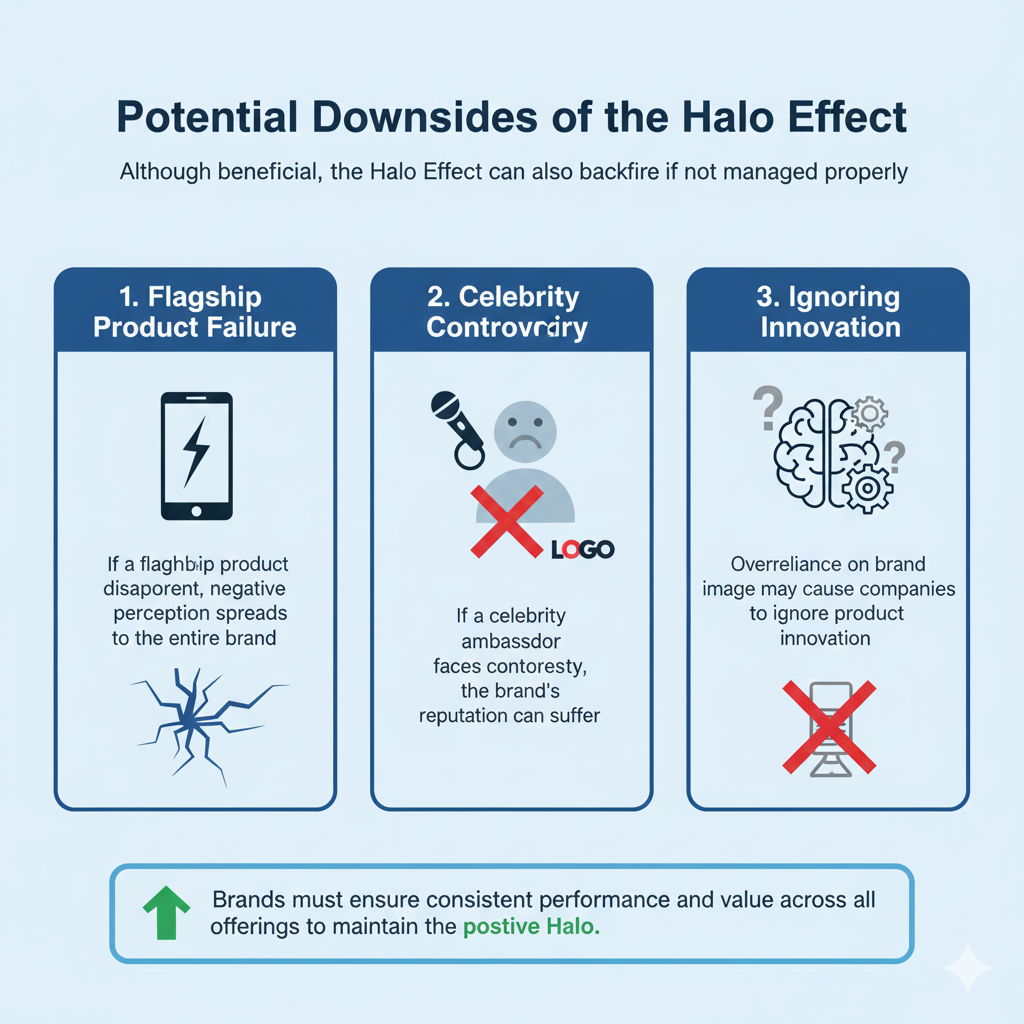
- If a flagship product disappoints, negative perception spreads to the entire brand.
- If a celebrity ambassador faces controversy, the brand’s reputation can suffer.
- Overreliance on brand image may cause companies to ignore product innovation.
Brands must ensure consistent performance and value across all offerings to maintain the positive Halo.
Why the Halo Effect Works: The Psychology Behind It
The human brain prefers mental shortcuts to process information. Rather than evaluating every product feature logically, people rely on emotional impressions and past experiences.
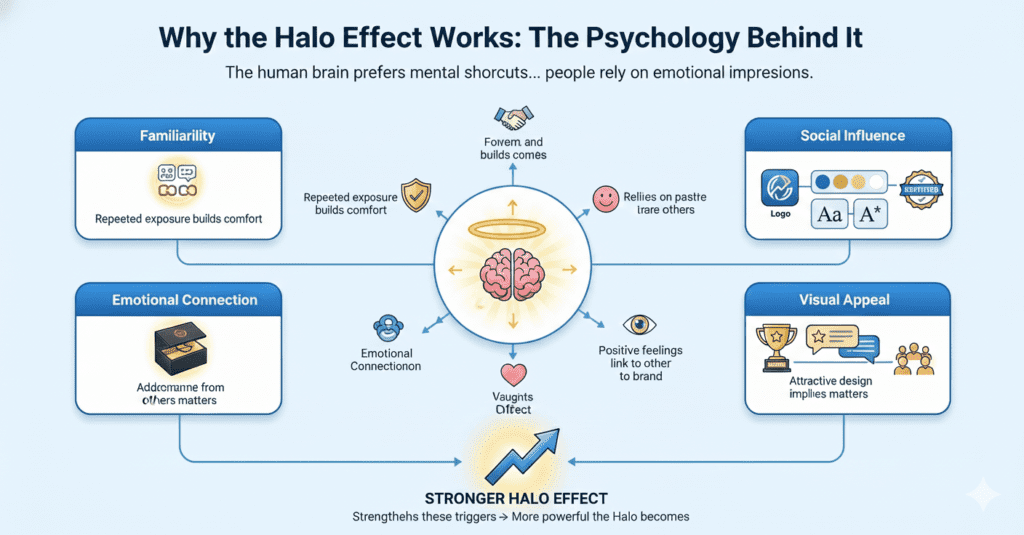
Key psychological triggers of the Halo Effect:
- Familiarity
- Trust
- Emotional connection
- Social influence
- Visual appeal
The more a brand strengthens these triggers, the more powerful the Halo becomes.
How Small Businesses Can Use the Halo Effect
Even businesses with limited budgets can implement the Halo Effect successfully with strategies like:
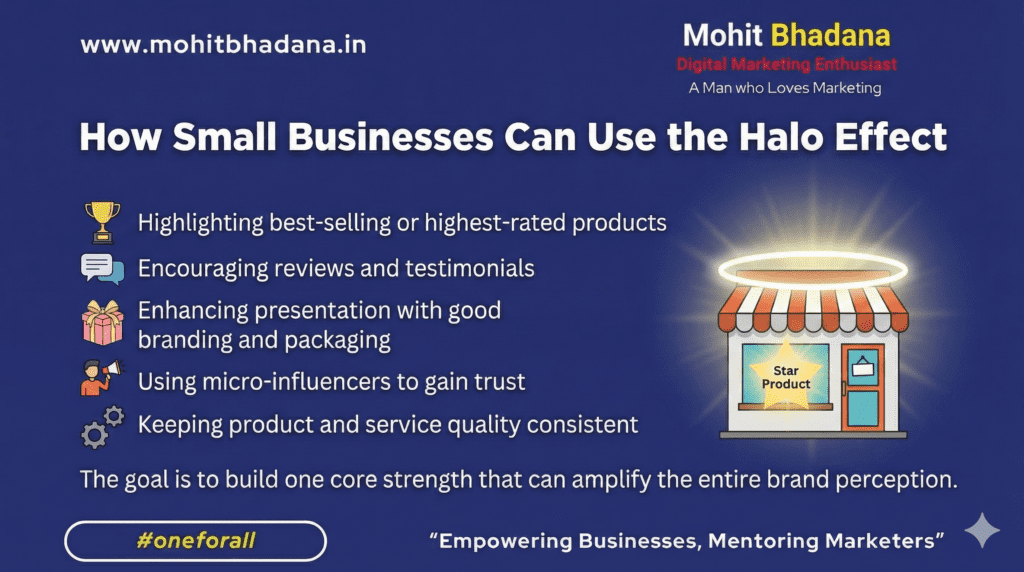
- Highlighting best-selling or highest-rated products
- Encouraging reviews and testimonials
- Enhancing presentation with good branding and packaging
- Using micro-influencers to gain trust
- Keeping product and service quality consistent
The goal is to build one core strength that can amplify the entire brand perception.
FAQs
1. What is the Halo Effect in marketing?
It is a psychological bias where consumers form a positive impression of a brand based on a single strong characteristic, which influences their buying decisions about other products.
2. Why is the Halo Effect important for brands?
It builds trust, increases customer loyalty, improves conversion rates, and encourages customers to try multiple products from the same brand.
3. Can small businesses use the Halo Effect?
Yes. They can use strong branding, social proof, influencer credibility, and consistent quality to build a positive perception.
4. Can the Halo Effect be negative?
Yes. If a main product performs poorly, negative opinions can quickly spread across the entire brand
5. Is the Halo Effect relevant in digital marketing?
Absolutely. Online reviews, influencer content, branding consistency, and product visuals play a major role in shaping consumer perception.
Learn more about Marketing and Digital Advertising –
Read more – What is marketing and 7Ps & 4C of Marketing?
What is Digital marketing and its types?

Digital Marketing Strategist , Consultant & Trainer