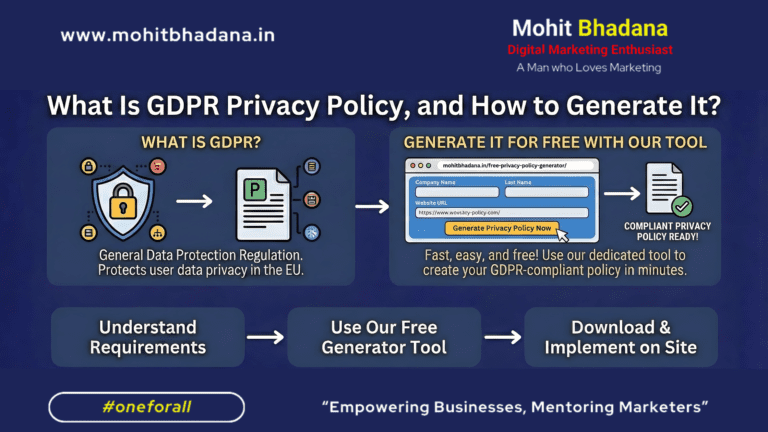
Blog Summary
This educational guide explains the meaning of GDPR Privacy Policy, why businesses need it, who it applies to, and the steps to generate a GDPR-compliant policy. You’ll also learn the essential components of a GDPR Privacy Policy and get access to a free online privacy policy generator.
What Is GDPR Privacy Policy, and How to Generate It?
If you run a website, app, or eCommerce store or collect any user data, you’ve probably heard of GDPR — a privacy regulation designed to protect user data and promote transparency.
But what does GDPR Privacy Policy actually mean?
Why do websites need it?
And most importantly, how can you quickly generate a GDPR-ready privacy policy without legal knowledge?
Let’s break it down in a simple and educational manner.
What Is GDPR? (General Data Protection Regulation)
GDPR is a data protection law created by the European Union (EU) to safeguard users’ personal data. It became effective on May 25, 2018, and applies to:
- Businesses in the EU
- Businesses outside the EU that collect or process data of EU users
This means even if you are in India, the USA, or any non-EU country, GDPR applies if your website gets EU visitors.
What Is a GDPR Privacy Policy?
A GDPR Privacy Policy is a legally required document that explains:
- What personal data do you collect
- Why do you collect it
- How you use it
- How you store and protect it
- Whether you share it
- Users’ rights under GDPR
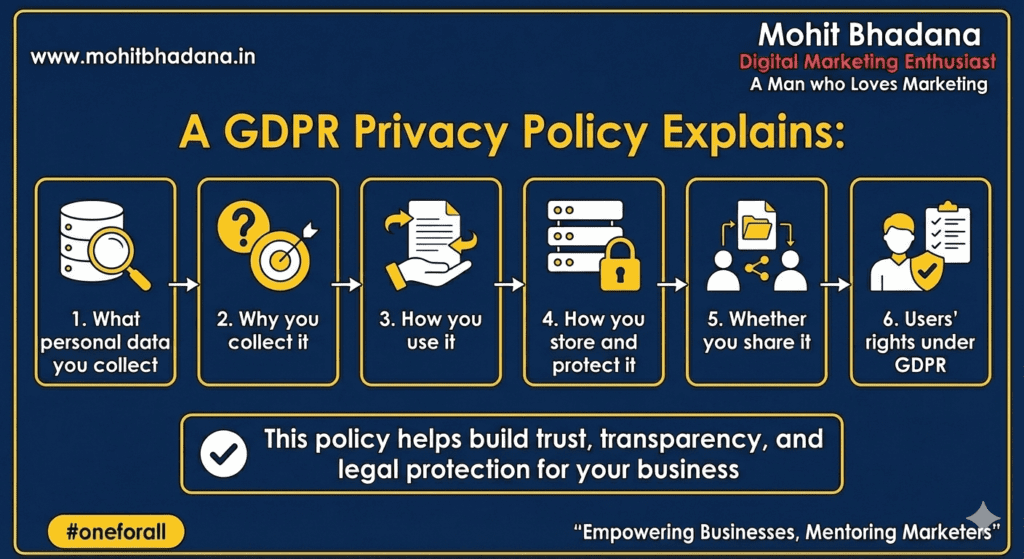
This policy helps build trust, transparency, and legal protection for your business.
Why Is a GDPR Privacy Policy Important?
Here are the key reasons:
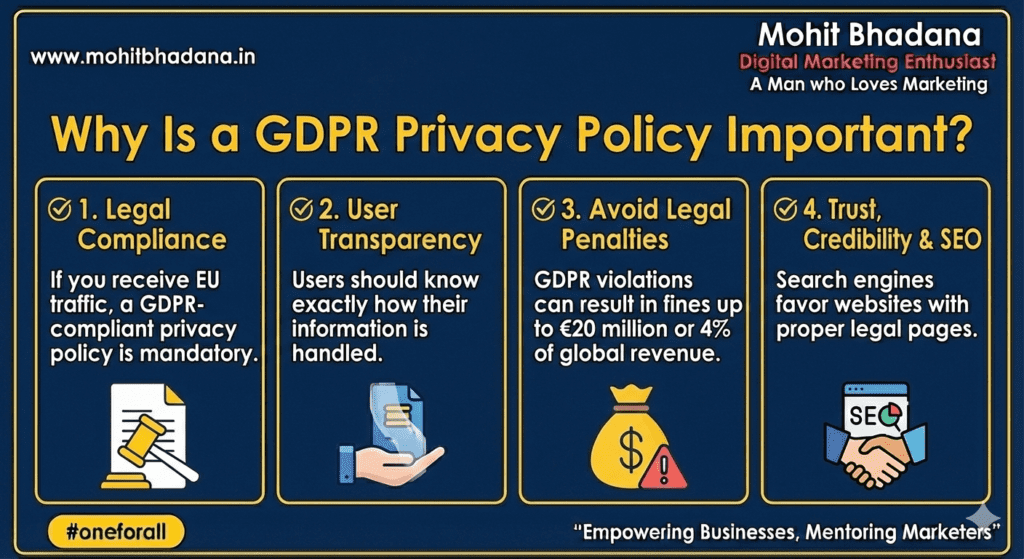
1. Legal Compliance
If you receive EU traffic, a GDPR-compliant privacy policy is mandatory.
2. User Transparency
Users should know exactly how their information is handled.
3. Avoid Legal Penalties
GDPR violations can result in fines up to €20 million or 4% of global revenue.
4. Trust, Credibility & SEO
Search engines favour websites with proper legal pages.
What Should a GDPR Privacy Policy Include?
To meet GDPR standards, your privacy policy must cover:
Data You Collect
Examples:
- Name
- Email
- IP address
- Cookies
- Payment details
Why You Collect It (Purpose)
Examples:
- Account creation
- Marketing
- Analytics
- Order processing
How You Process and Store Data
Explain storage, encryption, and data retention duration.
Third-Party Sharing
List tools like:
- Google Analytics
- Facebook Pixel
- Payment gateways
User Rights Under GDPR
Such as:
- Right to access
- Right to delete
- Right to withdraw consent
Cookies & Tracking Technologies
Must disclose usage.
Contact Information
Users should know how to contact the data controller.
Creating this manually can be time-consuming — but there’s an easier way.
How to Generate a GDPR Privacy Policy Easily
You don’t need legal expertise. You just need to provide basic business info.
Here’s the easiest way to create one:
👉 Use My Free Privacy Policy Generator Tool
I built a simple, fast, and accurate generator for creators, marketers, and business owners:
🔗 https://mohitbhadana.in/free-privacy-policy-generator/
Just enter your:
- Website name
- Business details
- Contact email
And the tool generates a GDPR-friendly Privacy Policy instantly.
Perfect for:
✔ Websites
✔ Blogs
✔ Apps
✔ SaaS tools
✔ Shopify/WordPress stores
Educational Example: GDPR in Real Life
Imagine you run a digital marketing blog and collect emails for newsletters.
According to GDPR, you must clearly explain:
- You collect email addresses
- You will use them for updates
- Users can unsubscribe anytime
- Data is stored securely
A GDPR Privacy Policy ensures all this is documented properly.
Benefits of Using a GDPR-Ready Privacy Policy
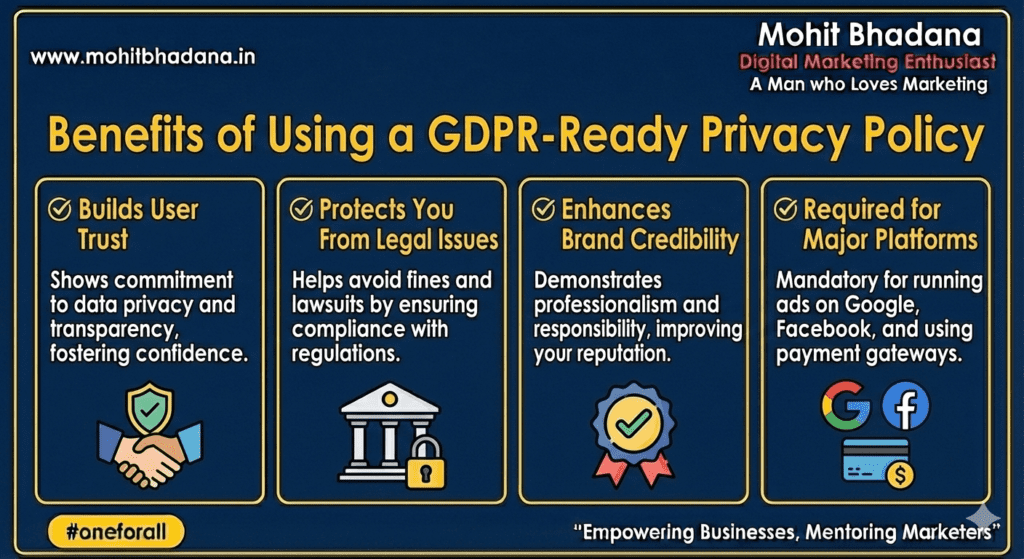
- Builds user trust
- Protects you from legal issues
- Enhances brand credibility
- Required for Google Ads, Facebook Ads, and payment gateways
Tips for Maintaining GDPR Compliance
✔ Use SSL (HTTPS)
✔ Add a cookie consent banner
✔ Avoid collecting unnecessary data
✔ Allow users to delete data
✔ Update your privacy policy when needed
Conclusion
A GDPR Privacy Policy is more than a legal requirement — it is a commitment to transparency and responsible data handling. Whether you’re a creator, marketer, or business owner, having a proper policy protects both your users and your brand.
And instead of writing one from scratch…
👉 Use this tool to generate a GDPR-compliant privacy policy instantly:
🔗 https://mohitbhadana.in/free-privacy-policy-generator/
Easy. Fast. Free.
FAQs
1. What is a GDPR Privacy Policy?
A GDPR Privacy Policy is a legal document that explains how your website collects, uses, stores, and protects the personal data of EU users.
2. Who needs GDPR compliance?
Any business that processes data of EU residents, even if the business is outside the EU.
3. How do I generate a GDPR Privacy Policy?
Use an online generator like this one:
🔗 Free Privacy Policy Generator
https://mohitbhadana.in/free-privacy-policy-generator/
4. What data is covered under GDPR?
Any information that identifies a person: emails, IP addresses, names, device IDs, etc.
5. Is a privacy policy required for Google Ads or Facebook Ads?
Yes! Both platforms require an accessible privacy policy page.
6. Is using a generator enough for GDPR compliance?
A generator helps create the required legal text, but you must also follow GDPR practices (cookie consent, data protection, etc.)

Digital Marketing Strategist , Consultant & Trainer