Blog Summary The Halo Effect in marketing is a psychological bias where customers transfer their positive perception of one aspect of a brand to its entire product line. It influences purchasing decisions, brand loyalty, pricing power, and long-term customer relationships. Brands like Apple, Nike, and Google apply the Halo Effect extremely well, but small businesses can also leverage it by creating standout products, emphasising social proof, and maintaining strong branding. When used strategically, the Halo Effect becomes a powerful engine for business growth. What Is the Halo Effect in Marketing? The Halo Effect in marketing refers to a cognitive bias in which customers develop an overall positive perception of a brand, product, or individual based on one strong positive characteristic. Once that perception is formed, it extends to other areas of the brand—even if the customer has never experienced them. In simple terms: If customers like one thing about a brand, they are more likely to assume that everything from the same brand is good. This psychological effect becomes a powerful driver of trust, brand loyalty, and consumer spending. How the Halo Effect Influences Purchasing Decisions The Halo Effect works effortlessly in the minds of consumers: This is one of the reasons: Examples of the Halo Effect in Marketing To fully understand how powerful this effect is, here are practical examples: 1. Apple Apple built a reputation for innovation and product quality through the iPhone. As a result, customers trust MacBook, Apple Watch, and AirPods even before trying them. The strong brand reputation creates a Halo around its entire product ecosystem. 2. Nike Nike’s association with world-class athletes (Michael Jordan, Cristiano Ronaldo, Serena Williams) creates an impression that its products represent performance and success. Customers assume Nike shoes and apparel will make them “perform better.” 3. Google People trust Google’s search engine, so they automatically trust products like Gmail, Google Drive, Google Photos, and Google Maps—even before experiencing them. 4. Influencer Marketing or Influencer-Founded Brand When consumers admire a public figure, they begin to trust the brands that the individual endorses. This is why influencer-led campaigns convert strongly. For Example – Gourav Taneja aka Flying Beast’s Brand – Beast Life How Brands Apply the Halo Effect in Marketing Smart brands leverage the Halo Effect in multiple ways: 1. Lead with the Star Product Brands highlight their best-performing product to build a strong market reputation. When that product earns trust, customers naturally try other offerings. 2. Celebrity or Influencer Endorsements By associating with someone the audience already admires, brands borrow instant credibility. 3. Premium Packaging and Design When customers see beautiful packaging, they assume the product quality is also high. 4. Social Proof Customer reviews, awards, certifications, and ratings create trust that extends across all brand offerings. 5. Brand Consistency Consistent messaging, logo, typography, colour palette, website experience—all reinforce a positive mental image. Advantages of the Halo Effect in Marketing Benefit Why It Matters Builds immediate trust Shortens the sales cycle Increases brand loyalty Encourages long-term repeat purchase Boosts conversion rates Customers try more products without hesitation Allows premium pricing Customer perception reduces price sensitivity Enhances marketing efficiency Less effort is required to convince returning customers Potential Downsides of the Halo Effect Although beneficial, the Halo Effect can also backfire if not managed properly: Brands must ensure consistent performance and value across all offerings to maintain the positive Halo. Why the Halo Effect Works: The Psychology Behind It The human brain prefers mental shortcuts to process information. Rather than evaluating every product feature logically, people rely on emotional impressions and past experiences. Key psychological triggers of the Halo Effect: The more a brand strengthens these triggers, the more powerful the Halo becomes. How Small Businesses Can Use the Halo Effect Even businesses with limited budgets can implement the Halo Effect successfully with strategies like: The goal is to build one core strength that can amplify the entire brand perception. FAQs 1. What is the Halo Effect in marketing? It is a psychological bias where consumers form a positive impression of a brand based on a single strong characteristic, which influences their buying decisions about other products. 2. Why is the Halo Effect important for brands? It builds trust, increases customer loyalty, improves conversion rates, and encourages customers to try multiple products from the same brand. 3. Can small businesses use the Halo Effect? Yes. They can use strong branding, social proof, influencer credibility, and consistent quality to build a positive perception. 4. Can the Halo Effect be negative? Yes. If a main product performs poorly, negative opinions can quickly spread across the entire brand 5. Is the Halo Effect relevant in digital marketing? Absolutely. Online reviews, influencer content, branding consistency, and product visuals play a major role in shaping consumer perception. Learn more about Marketing and Digital Advertising – Read more – What is marketing and 7Ps & 4C of Marketing? What is Digital marketing and its types? Mohit BhadanaDigital Marketing Strategist , Consultant & Trainer mohitbhadana.in
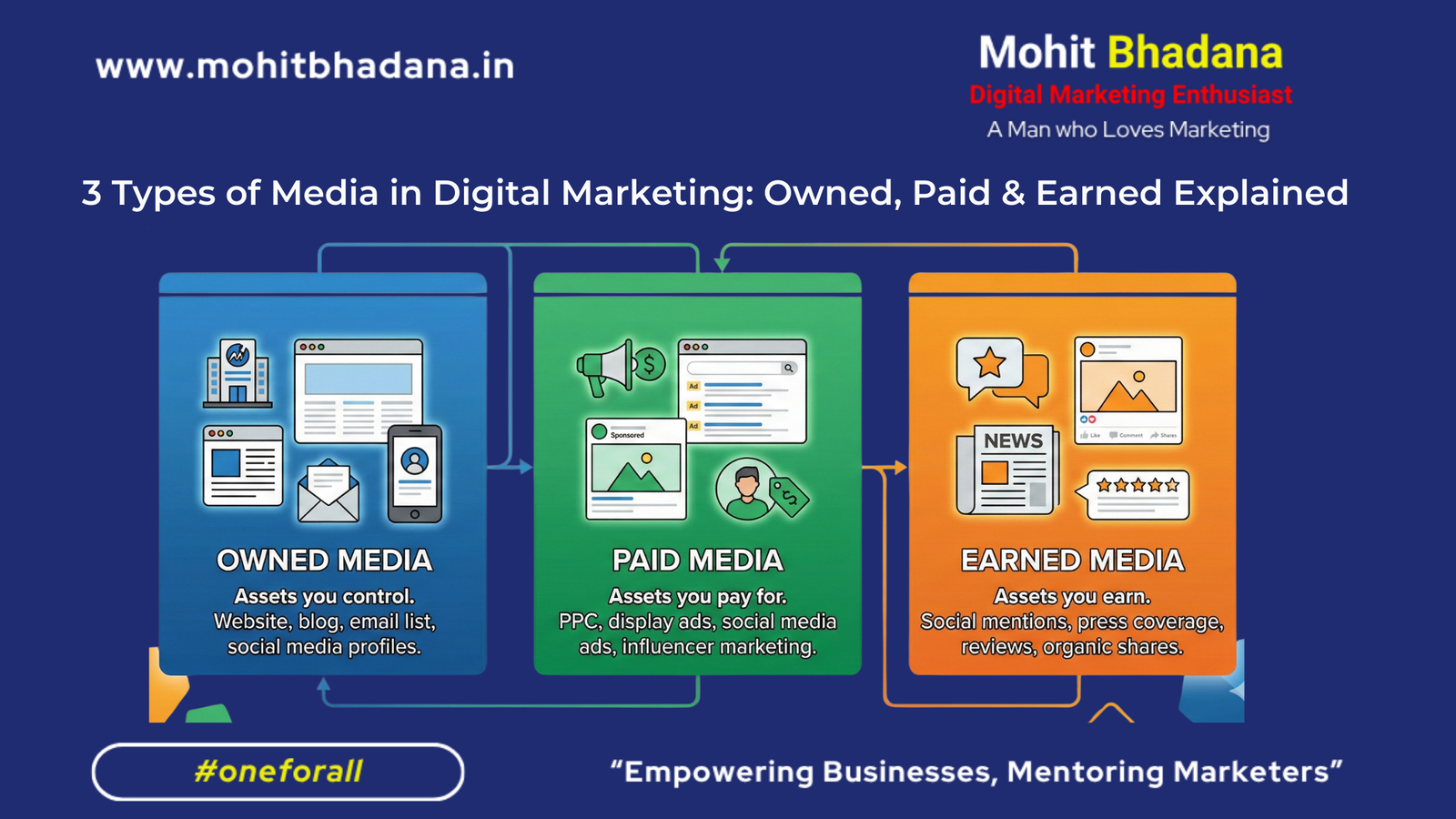
3 Types of Media in Digital Marketing: Owned, Paid & Earned Explained
Blog Summary In digital marketing, every successful brand uses a mix of Owned, Paid, and Earned Media to build visibility, trust, and conversions. This blog breaks down what each type means, its unique advantages, and how you can integrate them into your marketing strategy for maximum impact. 3 Types of Media in Digital Marketing: Owned, Paid & Earned In today’s digital landscape, businesses have countless ways to reach their audience. But every marketing effort — from social media posts to ads and PR mentions — fits into one of three categories of media: – Owned Media – Paid Media – Earned Media Understanding how these work (and how to balance them) is key to building a strong, sustainable digital presence. 1. Owned Media — Your Digital Assets Definition: Owned media refers to all the online properties your brand owns and controls — where you can share content freely and maintain your brand identity. Examples: Your website, blog, email newsletters, mobile app, and social media handles. 💡 Real-World Example: Zomato Zomato’s owned media is a masterclass in brand communication.Their official app and website not only allow users to order food but also showcase restaurant ratings, delivery insights, and user reviews — all carefully structured for SEO and engagement.Zomato also uses its Instagram and LinkedIn pages as extensions of its voice — mixing humor, trends, and food culture that reflect its unique personality. Takeaway: Zomato owns its communication platforms and uses them consistently to build a relatable, high-engagement community. 2. Paid Media — Your Amplifier Definition: Paid media includes every form of paid promotion you use to attract new audiences and drive quick conversions. Examples: Google Ads, Meta Ads, influencer sponsorships, YouTube ads, and display advertising. 💡 Real-World Example: Zepto Zepto’s launch campaign, “10-Minute Delivery,” became the talk of the town thanks to strategic paid advertising.They invested heavily in: Takeaway: Zepto used Paid Media to create mass awareness fast, then leveraged Owned and Earned Media to sustain it. 3. Earned Media — The Power of Reputation Definition: Earned media is unpaid exposure gained when others talk about your brand — reviews, shares, news mentions, or viral content. Examples: Press coverage, organic influencer mentions, social shares, and UGC (user-generated content). 💡 Real-World Example: boAt boAt earned massive visibility through organic influencer advocacy and social media buzz.Fans proudly call themselves “boAtheads” and share their experience online — not because they’re paid to, but because they love the product.This earned exposure also extends to celebrity shoutouts and press features, which boosted the brand’s trust factor without massive ad spends. Takeaway: boAt’s earned media success comes from authentic brand love and community building — turning customers into promoters. How They Combine All Three (Integration Example) Let’s connect the dots 👇 Similarly, boAt relies on community-driven Earned Media while reinforcing its brand with Owned content and Paid influencer partnerships. How Owned, Paid, and Earned Media Work Together The magic happens when all three media types work in sync. Media Type Control Cost Objective Owned Full Low Build trust & educate audience Paid Partial Medium/High Drive traffic & conversions Earned None Free (indirect) Build credibility & awareness Example of Integration: You publish a blog on your website (owned). You run Facebook Ads to promote it (paid). People share it and mention your brand online (earned).→ That’s the perfect digital marketing loop. Best Practices for Balancing the 3 Media Types When done right, the trio creates a sustainable growth system — one that scales reach, engagement, and brand authority together. FAQs 1. What are the 3 types of media in digital marketing? The three main types are Owned Media, Paid Media, and Earned Media. Owned is what you control, Paid is what you promote, and Earned is what others say about you. 2. Why is it important to balance owned, paid, and earned media? Balancing all three helps build trust (earned), increase reach (paid), and maintain authority (owned). Relying on only one type limits your brand’s growth. 3. What is an example of earned media? An influencer mentioning your product or a happy customer sharing your post without being paid — that’s earned media. 4. Which media type gives the fastest results? Paid media gives instant visibility and traffic, while owned and earned media build long-term value. 5. How do I measure the effectiveness of each media type? Use analytics: learn more about Online consumer behaviour in today’s Digital era – read now Mohit BhadanaDigital Marketing Strategist , Consultant & Trainer mohitbhadana.in