
Blog Summary: Learn what Google My Business (GMB) is, how it boosts local search visibility and step-by-step instructions for listing your business on Google Maps. Discover how to optimize and manage your GMB profile to attract more customers and stay ahead of competitors. Dominate Local Search: What is Google My Business & How to List Your Business on Google Maps Introduction Did you know that 76% of people who search for a local business visit within a day? This highlights the power of local search and why businesses need a strong online presence. One of the most effective ways to achieve this is through Google My Business (GMB). This guide will walk you through what GMB is, its benefits, and how to list your business on Google Maps to increase local visibility and customer engagement. What is Google My Business (GMB)? Definition and Purpose Google My Business (GMB) is a free tool by Google that allows businesses to manage their online presence across Google Search and Google Maps. With a well-optimized GMB profile, businesses can attract more customers and provide essential details at a glance. Key Features of a GMB Profile A complete GMB profile includes: Benefits of Google My Business for Local Businesses ✅ Increases local search visibility – Appear in Google’s “Local Pack” for relevant searches. ✅ Boosts customer engagement – Respond to reviews, answer queries, and share updates. ✅ Improves online reputation – Higher ratings and positive feedback attract more customers. ✅ Encourages in-store visits – Businesses with complete GMB profiles see 70% more visits. Why Your Business Needs a GMB Listing 1. Increased Local Search Visibility Having a GMB listing improves rankings in Google’s local search results. When someone searches for “best pizza near me,” businesses with optimized GMB profiles appear at the top, increasing their chances of getting customers. 2. Enhanced Customer Engagement With GMB, you can: ✔ Respond to customer reviews ✔ Answer frequently asked questions ✔ Post updates, offers, and events 3. Competitive Advantage Businesses actively managing their GMB profile outperform competitors who ignore it. For example, a coffee shop with updated photos, promotions, and customer reviews will attract more visitors than a shop without a GMB listing. How to List Your Business on Google Maps Step 1: Create a Google Account If you don’t already have one, sign up for a Google account at accounts.google.com. Step 2: Search for Google My Business Step 3: Optimize Your GMB Profile Once your business is listed, optimize it with: ✔ Accurate Business Name – Ensure consistency with your branding. ✔ Correct Address & Contact Information – Make it easy for customers to find you. ✔ Business Categories – Choose relevant categories (e.g., “Bakery,” “Coffee Shop”). ✔ Website URL – Link to your website for more details. ✔ Compelling Business Description – Include relevant keywords naturally. ✔ High-Quality Photos & Videos – Showcase your location, products, and team. Step 4: Verify Your Business Google will send a verification code via postcard, phone, or email. Enter the code to activate your listing. check step by step guide with images Optimizing Your GMB Profile for Maximum Impact 1. Use Target Keywords Research and incorporate local search keywords like: 2. Upload High-Quality Photos & Videos ✔ Businesses with photos receive 42% more requests for directions on Google Maps. ✔ Add images of your storefront, team, and products. ✔ Use videos for virtual tours or showcasing services. 3. Keep Your Listing Updated ✔ Update business hours for holidays & events. ✔ Add new services or menu items. ✔ Post special offers and announcements. Managing & Monitoring Your GMB Listing 1. Respond to Customer Reviews ✔ Engage with positive reviews – Thank customers for their support. ✔ Address negative reviews professionally – Show you care about customer feedback. 2. Track Performance with GMB Insights Monitor: 📌 Views – How often your profile is seen. 📌 Search Queries – What customers are searching for. 📌 Clicks & Calls – Customer interactions with your listing. 3. Leverage Google Posts & Offers Use Google Posts to share: ✅ Special discounts ✅ Event promotions ✅ Business updates Conclusion Google My Business is a powerful, free tool that helps local businesses dominate search results, connect with customers, and drive foot traffic. By following these steps—creating, optimizing, and managing your GMB listing—you can enhance your local search presence and stand out from the competition. 📌 Ready to boost your local visibility? Start your Google My Business listing today! 🚀 FAQs 1. What is Google My Business (GMB)? Google My Business is a free tool by Google that allows businesses to manage their online presence, appear in local search results, and connect with customers via Google Search and Maps. 2. How do I create a GMB listing? Go to Google My Business, click “Manage Now”, enter your business details, and verify your listing. 3. Why is GMB important for local businesses? A GMB listing improves visibility in local search, builds customer trust through reviews, and helps businesses engage with their audience effectively. 4. How do I optimize my GMB profile? Use high-quality photos, relevant keywords, updated business hours, and engaging descriptions to attract more customers. 5. Can I manage customer reviews on GMB? Yes! Respond to positive and negative reviews to engage with customers and improve your brand’s reputation. learn more about online visibility by understanding the consumer journey funnel in this blog Mohit BhadanaDigital Marketing Strategist , Consultant & Trainer mohitbhadana.in
What is Graphic Design, Color Psychology, and Color Palettes?
Blog Summary Graphic design and color psychology are powerful elements in the visual world. Every logo, advertisement, or website we see influences our perception and emotions through strategic design choices. Understanding how colors impact human behaviour helps designers create compelling visuals that evoke the desired responses. In this article, we will explore the fundamentals of graphic design, the science behind color psychology, and the importance of choosing the right color palette. The Fundamentals of Graphic Design What is Graphic Design? Graphic design is the art and practice of visual communication using typography, imagery, color, and layout. It is essential for branding, advertising, web design, and digital marketing. Core Principles of Graphic Design: Types of Graphic Design: Essential Tools for Graphic Designers: Understanding Color Psychology What is Color Psychology? Image Source – www.jdsd.in Color psychology is the study of how colors influence emotions and behaviours. Different colors evoke different reactions, making color selection crucial in design and marketing. Common Color Meanings: Image source – thelogocompany.net Cultural Differences in Color Perception Color meanings can vary across cultures. For instance: The Importance of Color Palettes in Design What is a Color Palette? A color palette is a set of colors used consistently in a design to establish brand identity and maintain visual harmony. Use this tool to create a Free color pallet for your brand or design. Choosing the Right Color Palette for Your Design Case Studies: Successful Use of Colors in Branding Check How many types of logos are there “Colors are the silent storytellers of any design, speaking directly to the viewer’s emotions and influencing their perceptions.” Conclusion Graphic design, color psychology, and color palettes work together to create impactful visuals that influence perception and behavior. By understanding these elements, designers can craft compelling designs that connect with audiences on a deeper level. Whether designing a logo, website, or advertisement, thoughtful color selection plays a crucial role in visual storytelling. Next time you embark on a design project, leverage the power of color to create memorable and engaging experiences. FAQs 1. What is the role of color psychology in graphic design? Color psychology helps designers create emotional connections with audiences by using colors that evoke specific feelings and behaviors. 2. How do I choose the right color palette for my brand? Consider your brand message, target audience, and industry standards. Use complementary colors for contrast and consistency. 3. Why do different colors evoke different emotions? Colors are linked to psychological responses based on cultural associations, personal experiences, and natural instincts. 4. What are some free tools for selecting color palettes? Coolors, Adobe Color, and Canvas color palette generators are great tools for creating harmonious color schemes. Bonus – Get Canva Pro at the best prices 5. How do brands use color psychology in marketing? Brands use specific colors to evoke emotions and influence purchasing decisions, such as red for urgency in sales and blue for trust in finance. Mohit BhadanaDigital Marketing Strategist , Consultant & Trainer mohitbhadana.in
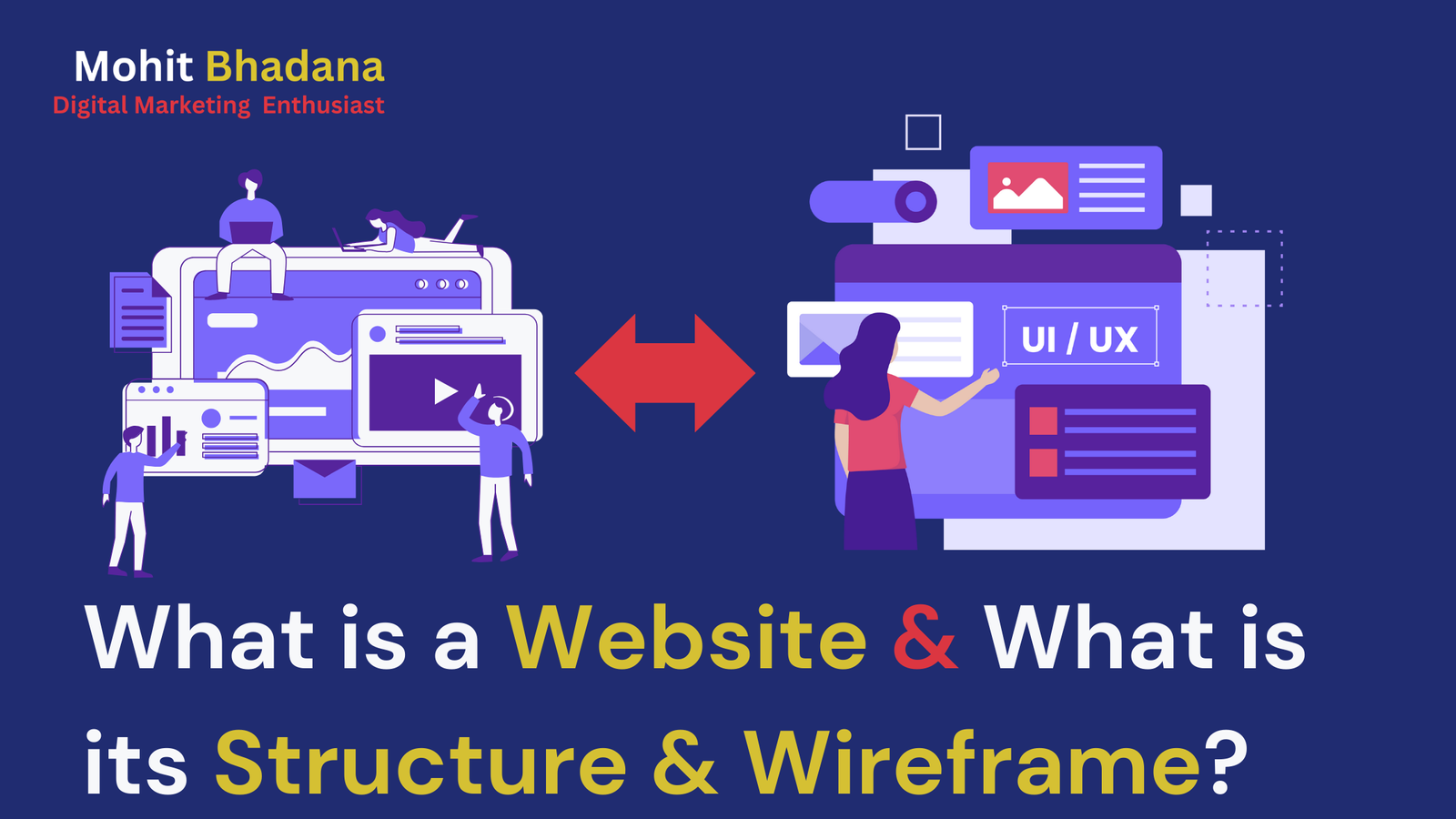
What is a Website and What is its Structure & Wireframe?
Blog Summary what is a website: – A website is a collection of interconnected web pages that serve various purposes, from sharing information and selling products to showcasing creative portfolios. A good website must have a strong structure, including key pages like the homepage, About Us, Contact, and Services/Products sections. Wireframing is an essential process for designing user-friendly layouts and improving collaboration between stakeholders. Whether you opt for a saas website builder, CMS platform, or custom development, understanding website structure and wireframing is vital for creating a successful online presence. What is a Website and What is its Structure & Wireframe? In the digital age, websites are the backbone of an online presence. With over 1.8 billion websites on the internet, having a well-structured and visually appealing site is crucial for businesses, individuals, and organizations. But what is a website, and how can you design one that stands out? This comprehensive guide explores the definition of a website, its structure, and the vital role wireframing plays in the design process. What is a Website? A website is a collection of interconnected web pages that can include text, images, videos, and other multimedia elements. These pages are hosted on a web server and are accessible via the Internet. Websites serve a variety of purposes, such as sharing information, promoting businesses, selling products, or building communities. Common Types of Websites Website Structure: The Framework of Functionality A well-structured UI ( user interface ) is vital for user experience (UX) and search engine optimization (SEO). Here’s a breakdown of the essential elements of a website’s structure: 1. Homepage The homepage serves as the main entry point, making it the most critical page for creating a strong first impression. It should communicate the website’s purpose and direct visitors to other sections. 2. About Us This section provides background information about the organization or individual, including their mission, vision, and story, as well as building trust and credibility. 3. Contact Page A contact page includes essential information like email addresses, phone numbers, social media links, and, in some cases, a map of physical locations. 4. Services/Products Highlighting services or products is a core function of most websites. This section should be user-friendly and include clear descriptions, visuals, and CTAs (calls to action). 5. Blog Section (Optional) A blog allows you to share updates, insights, and industry trends while also helping to boost SEO by targeting relevant keywords. check website creation notes on – Digital marketing Notes by Mohit Bhadana Website Wireframing: The Blueprint for Success Wireframing is a critical step in website design. It involves creating a skeletal layout of a webpage to plan its structure and functionality. Think of it as an architect’s blueprint for a building. Types of Wireframes Low-Fidelity Wireframes: Basic sketches that focus solely on the layout. Mid-Fidelity Wireframes: More detailed, including placeholders for content and images. High-Fidelity Wireframes: Interactive and polished, used for stakeholder presentations and final designs. Benefits of Wireframing Key Elements of a High-Quality Website To create a successful website, you must focus on these four key elements: Website Creation Modes: A Comparison Here’s a table comparing the three main modes of website creation: Aspect Website Builders (e.g., Wix, Shopify ) CMS Platforms (e.g., WordPress) Custom Development Ease of Use User-friendly, no coding required Moderate, some technical skills Requires coding expertise Customization Limited options Highly customizable with plugins Fully customizable Cost Budget-friendly, subscription-based Moderate, depends on hosting/plugins Expensive, time-intensive Scalability Suitable for small to medium-sized sites Scalable for larger sites Highly scalable Maintenance Managed by the platform Requires regular updates Ongoing developer maintenance Conclusion: Building a Winning Website A successful website relies on sound structure, clear wireframes, and essential elements. A well-planned and user-friendly site can significantly impact a business’s success. Start planning your website today, and make the digital world work for you! FAQs 1. What is the purpose of a website? A website serves as an online platform to share information, sell products, showcase portfolios, or build communities. 2. What is wireframing in web design? Wireframing is a process that outlines a website’s structure and layout to plan its functionality and design effectively. 3. What are the key elements of a website’s structure? The key elements include the homepage, About Us page, Contact page, and Services/Products section. 4. How does SEO benefit a website? SEO improves your website’s visibility on search engines, driving organic traffic and increasing engagement with your audience. 5. Which website creation method is best for beginners? Saas like Wix or Shopify are ideal for beginners due to their user-friendly interfaces and no-coding requirements. Mohit BhadanaDigital Marketing Strategist , Consultant & Trainer mohitbhadana.in
What is Web Hosting & The Best Types for Your Website?
Blog Summary Web hosting is essential for making your website accessible online. This guide explains the fundamentals of web hosting, how it works, and the differences between shared, VPS, dedicated, and cloud hosting. Each type serves unique needs, from budget-friendly shared hosting to powerful dedicated servers. Use this guide to choose the best hosting for your website and watch your online presence grow. What is Web Hosting? Types of Hosting Explained for Your Website Your favourite online store offers millions of products, but have you ever wondered how it’s all possible? Websites rely on a hidden backbone—web hosting. Without web hosting, browsing, shopping, or banking online wouldn’t exist. In this guide, we’ll explain what web hosting is, how it works, and explore four common types of hosting—shared, VPS, dedicated, and cloud hosting—so you can pick the perfect option for your website. What is Web Hosting? Web hosting is a service that allows your website to be accessible on the internet. Hosting providers store your website’s files on a server, making them available to anyone, anywhere. When a user types your domain name, the server retrieves those files and displays them in their browser. This makes web hosting critical for keeping your website visible and functional. How Does Web Hosting Work? Key Factors to Consider When Choosing a Web Host Types of Web Hosting: Which One is Right for You? 1. Shared Hosting: Affordable and Beginner-Friendly With shared hosting, your website shares a server with multiple others. It’s the most budget-friendly option but comes with resource limitations. Cost: $3–$10 per monthBest For: Small blogs, portfolio sites, and startups Pros: Cons: Example: A local bakery used shared hosting to launch its first website, keeping costs low while building an online presence. 2. VPS Hosting: A Balance of Cost and Control VPS (Virtual Private Server) hosting divides a physical server into multiple virtual servers, giving you more resources and control than shared hosting. Cost: $20–$80 per monthBest For: Growing blogs, high-traffic websites, small businesses Advantages: Example: A tech blog with increasing monthly visitors upgraded to VPS hosting to handle the traffic surge without downtime. 3. Dedicated Hosting: Ultimate Power and Performance With dedicated hosting, you have an entire server for your website. This option is ideal for high-traffic sites or applications requiring maximum performance. Cost: Starts at $80/monthBest For: Large businesses, e-commerce platforms, enterprise-level applications Why Choose Dedicated Hosting? Example: A global e-commerce site switched to dedicated hosting to ensure lightning-fast speeds during peak shopping seasons. 4. Cloud Hosting: Scalable and Reliable Cloud hosting uses multiple servers to host your website, offering exceptional scalability and reliability. Cost: Varies based on usage (starting at ~$10/month)Best For: Websites with fluctuating traffic, SaaS businesses, or businesses needing high uptime Benefits: Example: A growing SaaS startup adopted cloud hosting to handle spikes in user traffic during product launches. How to Choose the Best Web Hosting for Your Website Here’s a table comparing the different types of hosting: Feature Shared Hosting VPS Hosting Dedicated Hosting Cloud Hosting Definition Multiple websites share one server Virtual servers within a shared server A single server dedicated to one user Websites hosted across multiple servers Cost $3–$10/month $20–$80/month Starts at $80/month Pay-as-you-go (starting ~$10/month) Performance Limited, depends on other websites Moderate, with dedicated resources High, full server resources available High, scalable based on demand Scalability Minimal Moderate Limited (requires upgrading hardware) Excellent (resources can be adjusted) Control Limited Semi-customizable Full control over server configurations High, but depends on provider Security Basic Better security with isolation Excellent, user-managed High with redundancy and failovers Best For Beginners, small blogs, portfolios Growing websites, small businesses Large websites, high-traffic platforms SaaS, apps, sites with traffic spikes Examples Personal blogs, local businesses Medium blogs, niche e-commerce sites Large e-commerce stores, enterprises Streaming services, growing startups This table summarizes the main differences, helping users decide which hosting type fits their needs best. here are some best hosting providers in India hostinger , Hostgator, Bluehost etc Here’s a quick checklist to guide your decision: Conclusion: Choose the Right Hosting, Grow Your Website Web hosting is the foundation of every website. By understanding the types of hosting—shared, VPS, dedicated, and cloud hosting—you can make an informed decision based on your needs and budget. Take the next step and choose a hosting provider that aligns with your goals. With the right setup, your website can achieve excellent performance, reliability, and growth. FAQs 1. What is web hosting, and why do I need it? Web hosting is a service that stores your website’s files on a server, making it accessible online. Without it, your site cannot be viewed by others. 2. What type of hosting is best for beginners? Shared hosting is best for beginners due to its affordability and ease of use. 3. How does cloud hosting differ from other types? Cloud hosting uses multiple servers, offering scalability and redundancy. If one server fails, another takes over, minimizing downtime. 4. When should I upgrade from shared hosting to VPS? Upgrade to VPS when your site experiences traffic growth or requires more control and resources than shared hosting can provide.5. Is dedicated hosting worth the cost? Dedicated hosting is ideal for high-traffic websites, e-commerce platforms, or applications requiring maximum performance and security. Buy the Best hosting , buy premium web hosting Want the perfect hosting partner for your digital journey? Check out why Hostinger is the best web hosting for digital marketers. Mohit BhadanaDigital Marketing Strategist , Consultant & Trainer mohitbhadana.in
What is a Domain Name ? Your Complete Guide to Online Identity
Blog Summary A domain name is your website’s unique address on the internet, replacing complex IP addresses with memorable, user-friendly names. This guide explains the structure of domain names, their importance, and tips for choosing the right one. Learn how DNS works, the components of a URL, and best practices for managing your domain. Introduction In today’s digital world, having an online presence is essential, whether you’re a business, an organization, or an individual. One of the first steps in building your online identity is securing a domain name. But what exactly is a domain, and why is it so important? In this comprehensive guide, you’ll learn: The structure of a hyperlink (URL) and its components.By the end, you’ll have all the knowledge needed to choose and manage a domain effectively. What is a Domain Name and Why is it Important? Definition and Purpose of Domain A domain name is the unique address of a website on the internet. It replaces complex numerical IP addresses, making it easier for users to access websites. For example, instead of remembering “192.168.1.1,” you can simply type “www.example.com.” Just as a physical address directs people to a location, a domain directs users to a specific website. It serves as the foundation of your online identity, helping users find and interact with your content seamlessly. The Role of the Domain Name System (DNS) The Domain Name System (DNS) acts as the internet’s phonebook, translating human-readable domain names into IP addresses. When a user types a domain, the DNS locates the corresponding IP address, ensuring the browser connects to the correct server. For instance, when you enter “www.google.com,” the DNS ensures your browser reaches Google’s server to display the website. Anatomy of a Domain Name Understanding the structure of a domain helps you make informed decisions when choosing one for your website. Top-Level Domain (TLD) The TLD is the part of a domain that appears after the final dot (e.g., “.com”). There are several types of TLDs, including: Second-Level Domain (SLD) The SLD is the unique name chosen by the website owner, appearing before the TLD. For example, in “www.example.com,” “example” is the SLD. It represents your brand or entity, making it crucial for branding and recognition. Subdomains Subdomains help organize your website’s content into different sections. Examples include: How to Choose the Perfect Domain Name Choosing the right domain name can significantly impact your online visibility and branding. Here’s how to make the right choice: 1. Keyword Research Incorporating relevant keywords into your domain can boost your website’s SEO. Think about what your target audience might search for and include terms related to your niche. For example, a bakery might use “freshbakes.com” or “homemadepastries.net.” 2. Brandability Make your domain name memorable, unique, and easy to spell. Avoid using numbers, hyphens, or complicated words. A catchy name like “SnappyHosting.com” is more effective than “Best-Web-Hosting123.net.” 3. Check Availability Use registrars like GoDaddy, Namecheap, or Google Domains to check if your desired domain is available. If it’s taken, consider alternative TLDs or slight variations. 4. Keep it Short and Simple Short domain names are easier to remember and type. Aim for a name that is concise, clear, and directly related to your brand or business. The Structure of a Hyperlink (URL) A URL (Uniform Resource Locator) provides the complete address to access a specific web page. Let’s break down its components: For example, in the URL “https://mohitbhadana.in/blogs/” Protecting and Managing Your Domain Name Once you’ve secured your domain, it’s essential to protect and manage it effectively. Conclusion A domain name is more than just an address; it’s the cornerstone of your online identity. It makes your website accessible, enhances SEO, and contributes to your brand’s recognition. Choosing the right domain requires careful thought, but it’s a vital step in establishing a successful online presence. FAQs 1. What is a domain name? A domain name is the unique address of a website, allowing users to find it online without remembering numerical IP addresses. 2. Why is a domain important? It serves as your online identity, improves accessibility, and helps users connect with your brand easily. 3. What are TLDs? Top-level domains (TLDs) are the last part of a domain (e.g., .com, .org) that categorize websites based on purpose or region. 4. How do I choose the right domain name? Focus on keyword relevance, brandability, simplicity, and availability when selecting your domain name. 5. How can I protect my domain name? Enable domain privacy, renew your domain on time, and use secure registrars and SSL certificates to safeguard your domain . Boost your online presence even further by exploring why Hostinger is the best web hosting for digital marketers Mohit BhadanaDigital Marketing Strategist , Consultant & Trainer mohitbhadana.in
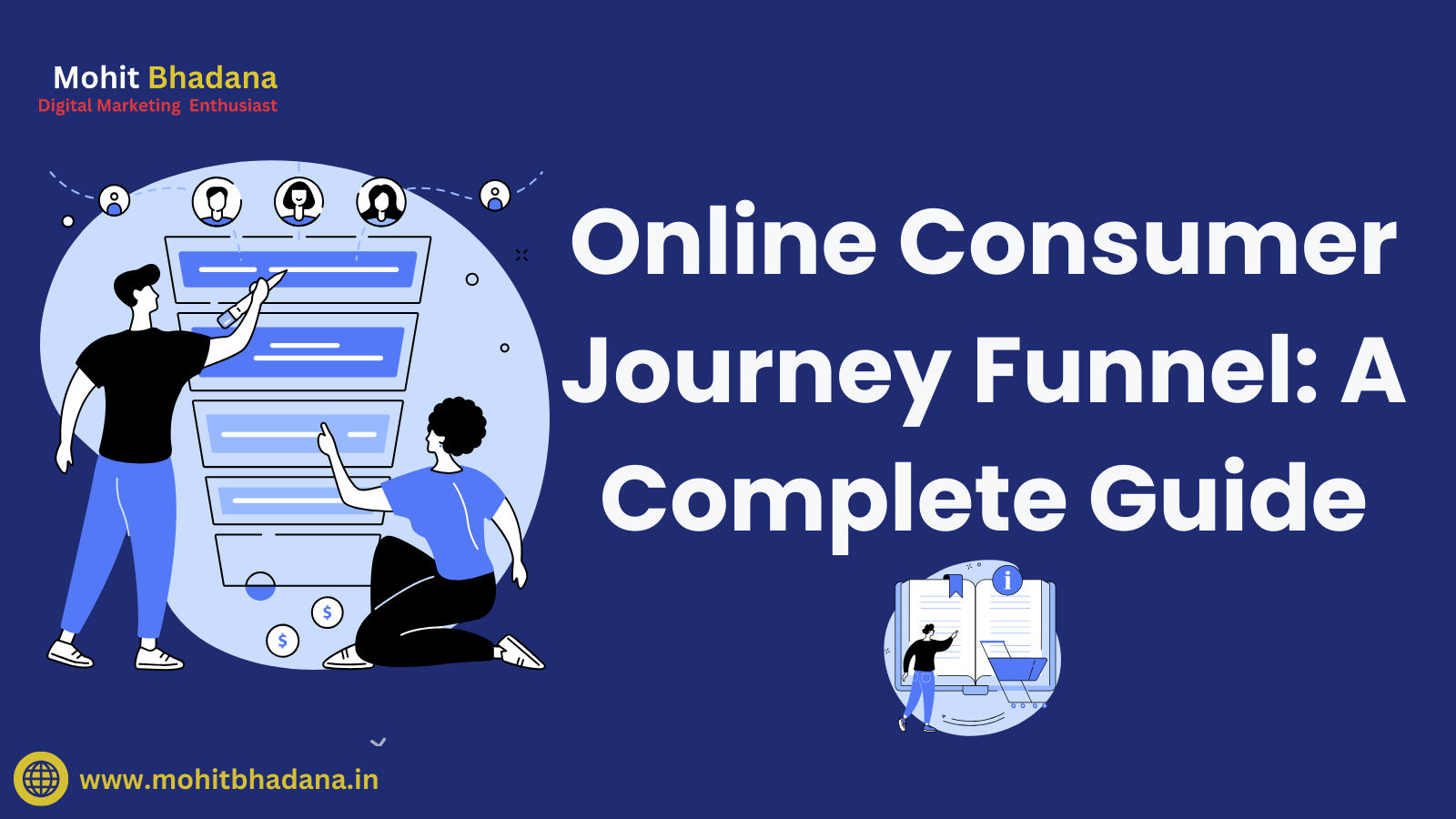
The Online Consumer Journey Funnel: A Complete Guide
Blog Summary: This blog provides a comprehensive guide to the online consumer journey funnel, which outlines the steps consumers take from discovering a brand to becoming loyal advocates. It explains the five key stages—Awareness, Interest, Consideration, Decision/Purchase, and Retention/Loyalty—offering actionable tips for businesses at each stage. The article emphasizes the importance of creating SEO-friendly content, using engaging marketing strategies, optimizing the checkout experience, and fostering loyalty through post-purchase engagement. It also discusses the role of data analytics and A/B testing in optimizing the funnel for better performance. By mastering this funnel, businesses can enhance their marketing efforts, boost conversions, and build lasting customer relationships. In the fast-paced world of online shopping, studies show that over 70% of consumers research products online before making a purchase. Understanding the online consumer journey funnel is essential for businesses aiming to capture and retain this audience. The funnel represents the steps consumers take from discovering a brand to becoming loyal advocates. Grasping each stage helps businesses create effective marketing strategies that lead to success. What is the Online Consumer Journey Funnel? The online consumer journey funnel is a marketing framework that illustrates the process customers go through from initially discovering a brand to becoming loyal advocates. It breaks down this journey into distinct stages, helping businesses understand how consumers interact with their products or services at each step. Stages of the Online Consumer Journey Funnel Awareness The awareness stage marks the first point of contact between consumers and your brand. This is when they discover your product through various channels. Interest Once consumers know about your product, they may start showing interest. This is the stage where capturing that attention is vital. Consideration During the consideration stage, consumers evaluate their options. They compare products and think about which one best suits their needs. The Decision Stage of Online Consumer Journey Funnel: Conversion and Beyond Decision/Purchase In the decision stage, consumers are almost ready to buy. Influencing their purchase decision is key to conversions. Action/Purchase The action or purchase phase is crucial. Consumers should find the checkout experience smooth and secure. Post-Purchase Engagement Stage of Online Consumer Journey Funnel: Fostering Loyalty Retention and Loyalty Building brand loyalty is about keeping customers coming back. Retaining customers is often cheaper than acquiring new ones. Advocacy Happy customers can turn into your best advocates. Their recommendations can drive new customers to your brand. Analyzing and Optimizing Your Funnel Data Analytics Using data analytics helps monitor your funnel’s performance. This allows you to tweak strategies effectively. A/B Testing A/B testing is crucial for improving different funnel stages. It allows you to determine what works best for your audience. FAQs 1. What is the online consumer journey funnel?The online consumer journey funnel represents the stages a customer goes through, from discovering a brand to becoming a loyal advocate. 2. What are the key stages of the online consumer journey funnel?The five key stages are: 3. How can businesses increase brand awareness in the funnel?Businesses can use SEO-friendly content, social media, and targeted advertising to increase visibility during the awareness stage. 4. What role does customer retention play in the funnel?Customer retention is vital because retaining existing customers is often more cost-effective than acquiring new ones. Loyalty programs and excellent customer service can help build retention. 5. How can A/B testing improve the funnel?A/B testing helps businesses experiment with various marketing elements, such as email subject lines or call-to-action buttons, to determine what resonates best with their audience. Conclusion: Mastering the Online Consumer Journey Funnel Understanding the online consumer journey funnel can transform your marketing efforts. Each stage—awareness, interest, consideration, decision, and action—requires careful attention and optimization. By focusing on these stages, businesses can improve their chances of success. Start today by analyzing your current funnel and identifying areas for improvement. Implement small changes to see significant results in your conversions and customer loyalty. Mohit BhadanaDigital Marketing Strategist , Consultant & Trainer mohitbhadana.in
What is Digital Marketing and Its Types
Blog Summary – This blog provides an in-depth overview of digital marketing, exploring its core concept and various types of Digital marketing, such as SEO, PPC, content marketing, social media marketing, and email marketing. It delves into how these methods work, emphasizing the importance of engaging with target audiences, leveraging data analytics, and crafting personalized strategies. The blog also highlights key benefits of digital marketing, including increased online visibility, improved ROI, and better audience engagement. What is Digital Marketing? Digital marketing is an activity that promotes products, services, or personal brands through digital media. Digital marketing encompasses the use of digital channels such as websites, social media, search engines, and mobile applications to promote products or services. It enables businesses to connect with a vast audience in a cost-effective and measurable manner. As the digital landscape evolves, various strategies have emerged to effectively engage and convert potential customers. Types of Digital Marketing Digital marketers strategically leverage various types of digital marketing based on the unique nature of a business, its objectives, and key performance indicators (KPIs). Each business has distinct goals—whether it’s building brand awareness, generating leads, increasing sales, or enhancing customer retention—and selecting the right digital marketing approach is crucial to achieving these outcomes. Let’s explore the different types of digital marketing and how they align with diverse business goals. Search Engine Optimization (SEO) SEO involves optimizing a website to rank higher in search engine results pages (SERPs), thereby increasing organic (non-paid) traffic. This is achieved through keyword research, quality content creation, and improving site structure. The goal is to make the website more attractive to search engines like Google. Content Marketing This strategy focuses on creating and distributing valuable, relevant content to attract and retain a target audience. Formats include blog posts, videos, infographics, and eBooks. Effective content marketing establishes authority and fosters trust with potential customers. Social Media Marketing Utilizing platforms like Facebook, Instagram, Twitter (x.com), and LinkedIn, businesses can engage with their audience, build brand awareness, and promote products or services. Social media marketing involves both organic activities and paid advertising campaigns like Meta ads and LinkedIn ads. Email Marketing By sending targeted emails to a subscriber list, businesses can promote products, share news, or nurture relationships. Personalization and segmentation are key to successful email campaigns, ensuring relevant content reaches the right audience. Affiliate Marketing In this performance-based strategy, businesses reward affiliates (partners) for driving traffic or sales through the affiliate’s marketing efforts. It’s a cost-effective way to expand reach by leveraging the affiliate’s audience. Influencer Marketing Collaborating with influencers—individuals with a significant online following—allows brands to tap into established communities. Influencers can authentically promote products or services, enhancing credibility and reach. Video Marketing Creating engaging video content for platforms like YouTube or social media channels helps capture audience attention. Videos can demonstrate products, share customer testimonials, or provide educational content. Search Engine Marketing (SEM) SEM involves paid advertising to increase visibility in search engine results. Unlike SEO, which focuses on organic traffic, SEM includes tactics like PPC to drive traffic through paid ads. Summary Digital marketing encompasses a variety of strategies aimed at connecting with audiences through digital channels. From optimizing websites for search engines to engaging users on social media and leveraging email campaigns, each type plays a crucial role in building brand awareness, driving traffic, and increasing sales. As technology evolves, staying updated with the latest digital marketing trends and tools is essential for businesses aiming to remain competitive in the online landscape. FAQs What is SEO? Search Engine Optimization (SEO) is the practice of increasing the quantity and quality of traffic to your website through organic search engine results. Learn more – What are the 3 types of media in digital marketing? Mohit BhadanaDigital Marketing Strategist , Consultant & Trainer mohitbhadana.in