


Blog Summary
Choosing the right influencer is one of the most important factors in the success of an influencer marketing campaign. This guide explains what influencer marketing is, how it works, and the step-by-step process for selecting an influencer who aligns with your brand, target audience, and marketing objectives. You’ll learn about the different types of influencers, the 4R framework (Relevance, Reach, Resonance, and Reliability), essential influencer metrics, media kits, rate cards, whitelisting, outreach templates, and real-world examples from leading Indian brands like boAt, Mamaearth, Zomato, Myntra, and CRED. Whether you’re a business owner, digital marketer, or student, this comprehensive guide will help you build successful influencer partnerships that drive brand awareness, engagement, and conversions.
What is Influencer Marketing?
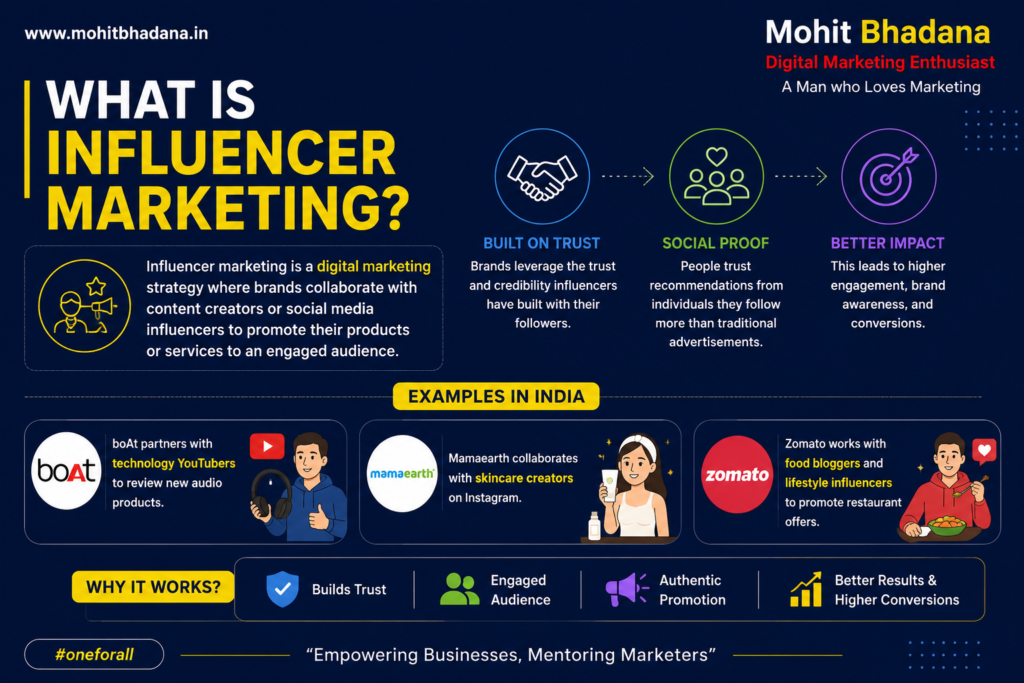
Influencer marketing is a digital marketing strategy where brands collaborate with content creators or social media influencers to promote their products or services to an engaged audience.
Instead of promoting directly through advertisements, brands leverage the trust and credibility that influencers have already built with their followers.
The concept is based on social proof, where people are more likely to trust recommendations from individuals they follow than traditional advertisements.

For example:
- boAt partners with technology YouTubers to review new audio products.
- Mamaearth collaborates with skincare creators on Instagram.
- Zomato works with food bloggers and lifestyle influencers to promote restaurant offers.
Why Influencer Marketing Works
Influencer marketing has become popular because it delivers benefits that traditional advertising often cannot.
Some major advantages include:
- Higher audience trust
- Better engagement rates
- Authentic product demonstrations
- Improved brand awareness
- Higher conversion rates
- Cost-effective campaigns for startups

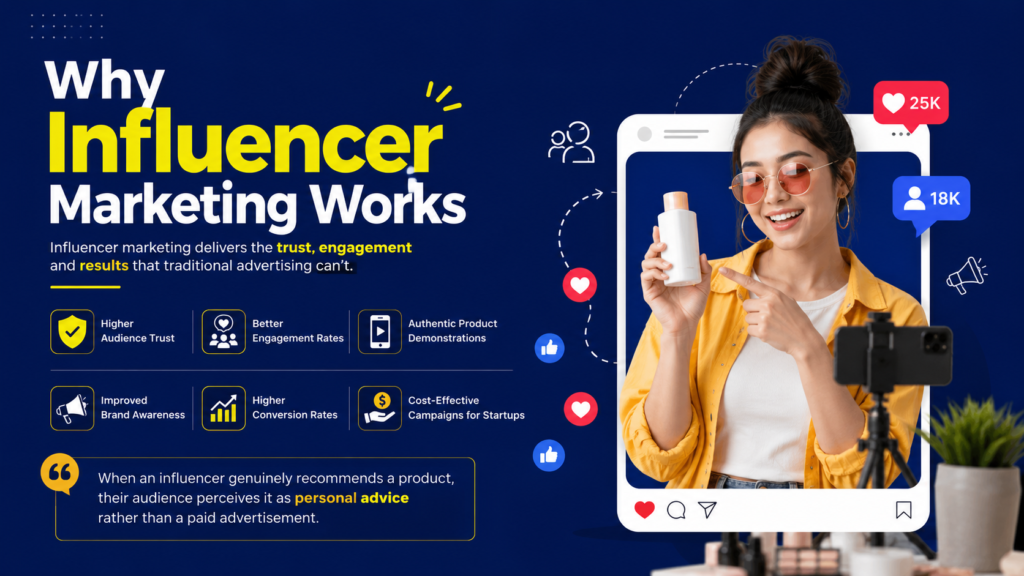
When an influencer genuinely recommends a product, their audience perceives it as personal advice rather than a paid advertisement.
Types of Influencers
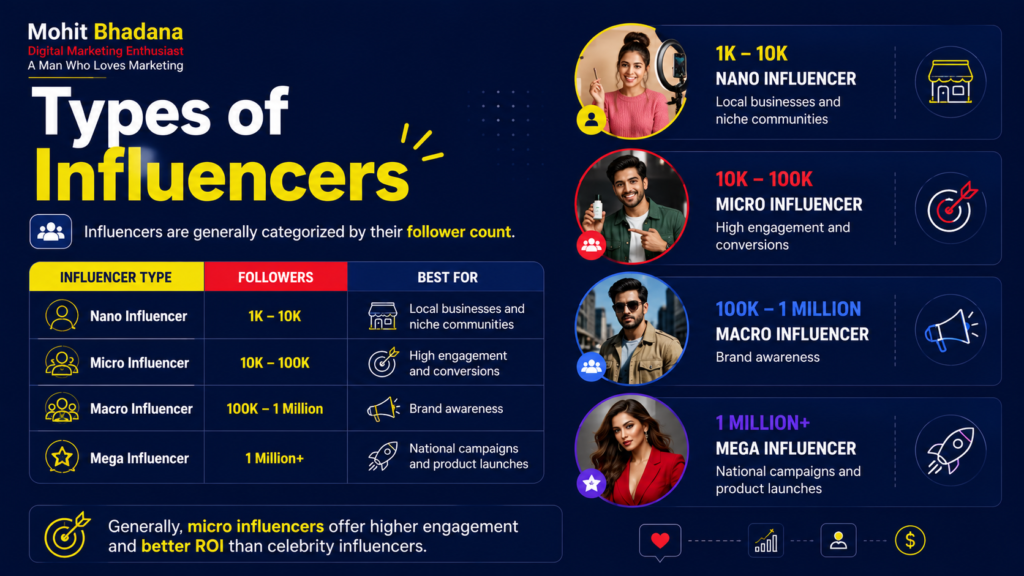
Influencers are generally categorized by their follower count.
| Influencer Type | Followers | Best For |
| Nano Influencer | 1K – 10K | Local businesses and niche communities |
| Micro Influencer | 10K – 100K | High engagement and conversions |
| Macro Influencer | 100K – 1 Million | Brand awareness |
| Mega Influencer | 1 Million+ | National campaigns and product launches |
Generally, micro influencers offer higher engagement and better ROI than celebrity influencers.
How to Select an Influencer for Brand Promotion
Selecting an influencer should never be based only on follower count.
A better approach is to evaluate creators using the 4R Framework.
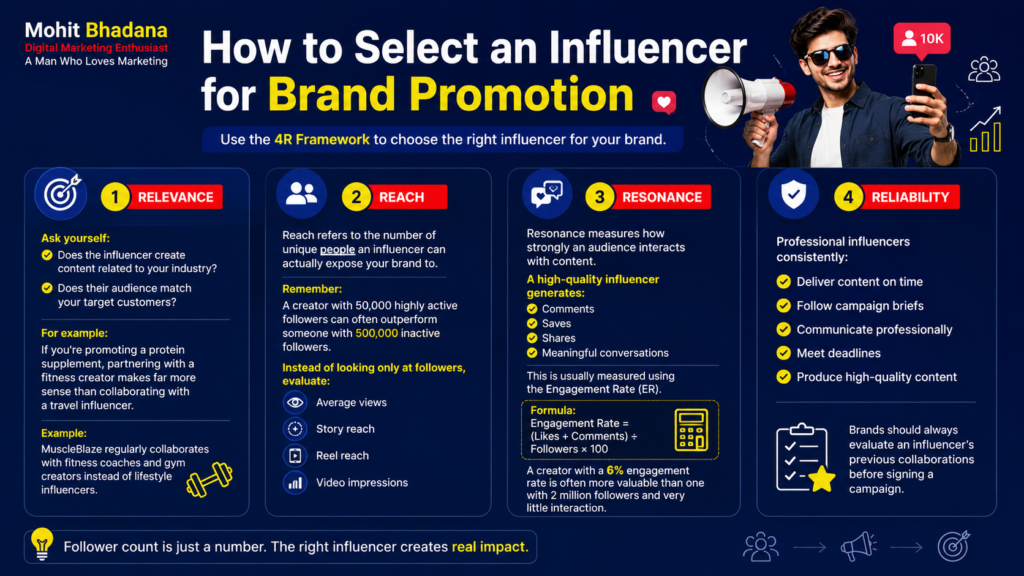
1. Relevance
Ask yourself:
- Does the influencer create content related to your industry?
- Does their audience match your target customers?
For example:
If you’re promoting a protein supplement, partnering with a fitness creator makes far more sense than collaborating with a travel influencer.
Example:
MuscleBlaze regularly collaborates with fitness coaches and gym creators instead of lifestyle influencers.
2. Reach
Reach refers to the number of unique people an influencer can actually expose your brand to.
Remember:
A creator with 50,000 highly active followers can often outperform someone with 500,000 inactive followers.
Instead of looking only at followers, evaluate:
- Average views
- Story reach
- Reel reach
- Video impressions
3. Resonance
Resonance measures how strongly an audience interacts with content.
A high-quality influencer generates:
- Comments
- Saves
- Shares
- Meaningful conversations
This is usually measured using the Engagement Rate (ER).
Formula:
Engagement Rate = (Likes + Comments) ÷ Followers × 100
A creator with a 6% engagement rate is often more valuable than one with 2 million followers and very little interaction.
4. Reliability
Professional influencers consistently:
- Deliver content on time
- Follow campaign briefs
- Communicate professionally
- Meet deadlines
- Produce high-quality content
Brands should always evaluate an influencer’s previous collaborations before signing a campaign.
Additional Factors to Consider Before Hiring an Influencer
Audience Demographics
Analyze whether the influencer’s audience matches your business.
Consider:
- Age
- Gender
- Location
- Language
- Interests
For example:
If your business serves Indian customers, partnering with creators whose audience is primarily in the United States may not produce strong results.
Content Quality
Review at least 20–30 recent posts.
Check for:
- Video quality
- Editing
- Storytelling
- Consistency
- Brand safety
The influencer’s content should naturally align with your brand image.
Brand Values
Avoid influencers who frequently promote unrelated products or engage in controversial activities.
Your brand reputation is closely tied to the people representing it.
Previous Brand Collaborations
Review brands they’ve worked with.
For example:
If a skincare creator has promoted five competing skincare brands in one month, their recommendations may appear less authentic.
How to Find the Right Influencers
Some effective methods include:
- Search niche hashtags
- Explore Instagram’s Suggested Accounts
- Review competitors’ tagged posts
- Use influencer discovery platforms
- Ask for the influencer’s media kit before finalizing the collaboration
Real Indian Brand Examples
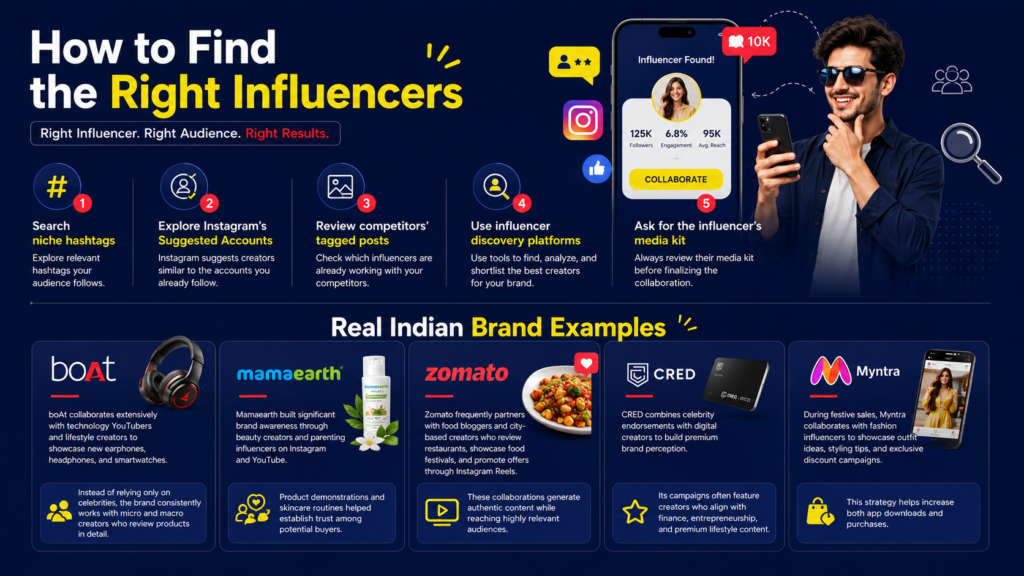
boAt
boAt collaborates extensively with technology YouTubers and lifestyle creators to showcase new earphones, headphones, and smartwatches.
Instead of relying only on celebrities, the brand consistently works with micro and macro creators who review products in detail.
Mamaearth
Mamaearth built significant brand awareness through beauty creators and parenting influencers on Instagram and YouTube.
Product demonstrations and skincare routines helped establish trust among potential buyers.
Zomato
Zomato frequently partners with food bloggers and city-based creators who review restaurants, showcase food festivals, and promote offers through Instagram Reels.
These collaborations generate authentic content while reaching highly relevant audiences.
CRED
CRED combines celebrity endorsements with digital creators to build premium brand perception.
Its campaigns often feature creators who align with finance, entrepreneurship, and premium lifestyle content.
Myntra
During festive sales, Myntra collaborates with fashion influencers to showcase outfit ideas, styling tips, and exclusive discount campaigns.
This strategy helps increase both app downloads and purchases.
Common Mistakes to Avoid
Many brands fail because they:
- Choose influencers based only on follower count
- Ignore audience demographics
- Focus on vanity metrics instead of engagement
- Skip background research
- Fail to define campaign objectives
- Don’t measure campaign performance
Best Practices for Successful Influencer Campaigns
Before launching a campaign:
- Define clear campaign objectives
- Choose influencers based on relevance
- Track engagement instead of followers
- Request audience insights
- Build long-term partnerships instead of one-time collaborations
- Measure ROI using UTM links, coupon codes, or conversions
Long-term collaborations often create stronger brand recall than one-off sponsored posts.
Conclusion
Influencer marketing is no longer limited to celebrities. Today, brands achieve better results by partnering with creators who have engaged communities and genuine influence.
The right influencer isn’t always the one with the highest follower count—it’s the one whose audience trusts their recommendations and aligns with your target market.
By evaluating creators using the 4R Framework (Relevance, Reach, Resonance, and Reliability), analyzing audience quality, and focusing on authentic partnerships, businesses can create campaigns that build trust, generate engagement, and drive measurable business growth.
Frequently Asked Questions
1. What is influencer marketing?
Influencer marketing is a strategy where brands collaborate with content creators to promote products or services to their engaged audience.
2. How do I choose the right influencer for my brand?
Evaluate influencers based on relevance, audience demographics, engagement rate, content quality, and reliability instead of follower count alone.
3. Which type of influencer is best for small businesses?
Micro influencers (10K–100K followers) often provide the best balance of engagement, affordability, and conversions.
4. Why is engagement rate more important than followers?
A high engagement rate indicates that an influencer’s audience actively interacts with their content, making campaigns more effective.
5. What is a media kit in influencer marketing?
A media kit is a document that includes an influencer’s audience demographics, engagement metrics, previous brand collaborations, pricing, and contact details.
6. What are the four factors to consider while selecting an influencer?
The most important factors are Relevance, Reach, Resonance, and Reliability.
Bonus: Influencer Marketing Terms Every Digital Marketer Should Know
If you’re planning to work with influencers, you’ll often hear industry-specific terms that can seem confusing at first. Understanding these terms will help you communicate professionally with creators, negotiate collaborations, and manage campaigns more effectively.
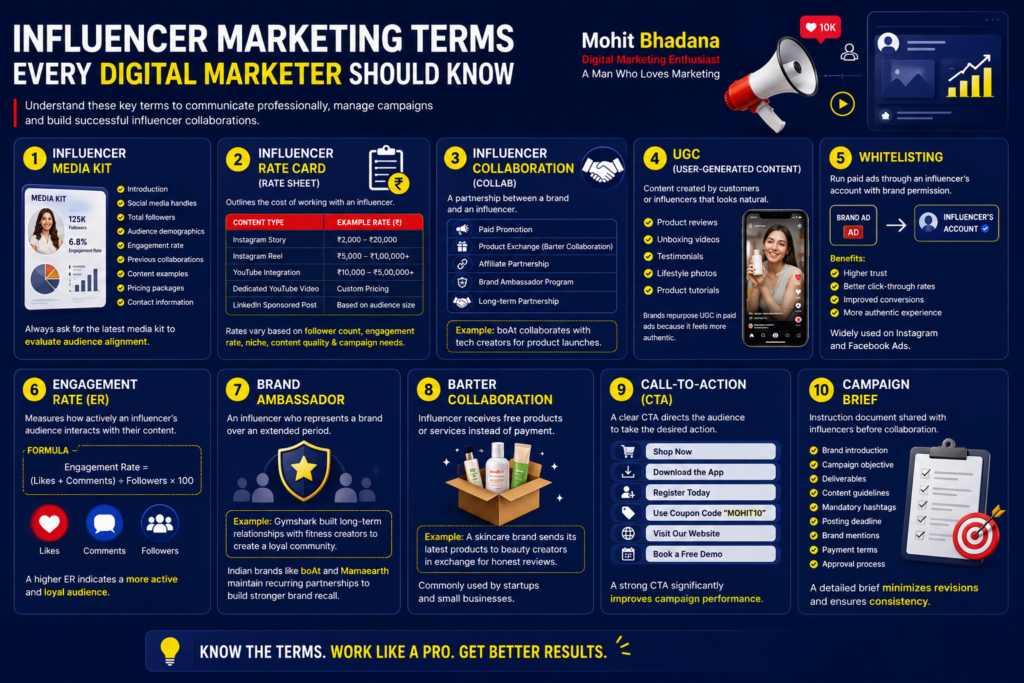
1. Influencer Media Kit
An Influencer Media Kit is a professional document that showcases an influencer’s profile and performance. Think of it as their digital resume.
A media kit usually includes:
- Introduction
- Social media handles
- Total followers
- Audience demographics
- Engagement rate
- Previous brand collaborations
- Content examples
- Pricing packages
- Contact information
Before hiring an influencer, always ask for their latest media kit. It helps you evaluate whether their audience aligns with your campaign goals.
2. Influencer Rate Card (Rate Sheet)
A Rate Card outlines the cost of working with an influencer.
Typical pricing may include:
| Content Type | Example |
| Instagram Story | ₹2,000–₹20,000 |
| Instagram Reel | ₹5,000–₹1,00,000+ |
| YouTube Integration | ₹10,000–₹5,00,000+ |
| Dedicated YouTube Video | Custom Pricing |
| LinkedIn Sponsored Post | Based on audience size |
Rates vary depending on:
- Follower count
- Engagement rate
- Niche
- Content quality
- Campaign requirements
3. Influencer Collaboration (Collab)
A Collaboration, commonly called a Collab, is a partnership between a brand and an influencer.
Common collaboration models include:
- Paid Promotion
- Product Exchange (Barter Collaboration)
- Affiliate Partnership
- Brand Ambassador Program
- Long-term Partnership
Example:
boAt frequently collaborates with technology creators for new product launches instead of running one-time campaigns.
4. UGC (User-Generated Content)
User-Generated Content (UGC) refers to content created by customers or influencers that looks natural rather than promotional.
Examples include:
- Product reviews
- Unboxing videos
- Testimonials
- Lifestyle photos
- Product tutorials
Brands often repurpose UGC in paid advertising because it feels more authentic than traditional advertisements.
5. Whitelisting
Whitelisting is an advanced influencer marketing strategy where a brand receives permission to run paid advertisements through the influencer’s social media account.
Instead of publishing ads from the brand’s account, the advertisement appears under the influencer’s profile.
Benefits include:
- Higher trust
- Better click-through rates
- Improved conversions
- More authentic user experience
This strategy is widely used on Instagram and Facebook Ads.
6. Engagement Rate (ER)
Engagement Rate measures how actively an influencer’s audience interacts with their content.
Formula
Engagement Rate = (Likes + Comments) ÷ Followers × 100
A higher engagement rate generally indicates a more active and loyal audience than follower count alone.
7. Brand Ambassador
A Brand Ambassador is an influencer who represents a brand over an extended period rather than promoting it in a single campaign.
For example:
Gymshark built long-term relationships with fitness creators instead of relying on one-off sponsored posts, creating a loyal community around the brand.
Similarly, Indian brands such as boAt and Mamaearth often maintain recurring partnerships with creators to build stronger brand recall.
8. Barter Collaboration
In a barter collaboration, the influencer receives free products or services instead of monetary payment.
Example:
A skincare brand sends its latest product range to beauty creators in exchange for honest reviews.
This model is especially common among startups and small businesses.
9. Call-to-Action (CTA)
Every influencer campaign should include a clear CTA.
Examples:
- Shop Now
- Download the App
- Register Today
- Use Coupon Code “MOHIT10”
- Visit Our Website
- Book a Free Demo
A strong CTA significantly improves campaign performance.
10. Campaign Brief
A Campaign Brief is the instruction document shared with influencers before collaboration.
It generally contains:
- Brand introduction
- Campaign objective
- Deliverables
- Content guidelines
- Mandatory hashtags
- Posting deadline
- Brand mentions
- Payment terms
- Approval process
A detailed brief minimizes revisions and ensures consistency across campaigns.
Bonus: Influencer Outreach Email Template
One of the biggest mistakes brands make is sending generic collaboration emails. Personalization significantly improves response rates.
Subject:
Collaboration Opportunity: [Brand Name] × [Influencer Name]
Email Template
Hi [Influencer Name],
I hope you’re doing well.
I’ve been following your content on Instagram/YouTube, and I particularly enjoyed your recent post about [Specific Topic]. Your content style and audience align well with our brand.
My name is [Your Name], and I represent [Brand Name]. We’re launching [Product or Service Name] and would love to explore a collaboration with you.
Could you please share your latest Media Kit and Rate Card?
Looking forward to hearing from you.
Best Regards,
[Your Name]
[Brand Name]
[Website]
[Email]
This outreach approach is based on the personalized collaboration template highlighted in your masterclass notes.
Bonus: Instagram DM Outreach Template
Hi [Name],
I really enjoy your content, especially your recent posts on [Topic].
I’m reaching out from [Brand Name]. We’re looking to collaborate with creators in the [Niche] space and believe you’d be a great fit.
If you’re interested, I’d love to discuss the campaign details. Could you please share your Media Kit or preferred email address?
Looking forward to hearing from you.
Pro Tips Before You Finalize an Influencer
Use this checklist before signing any collaboration:
- Audience matches your target market
- Engagement rate is healthy
- Content quality is consistent
- Previous collaborations feel authentic
- Posting frequency is regular
- No fake followers or suspicious engagement
- Professional communication
- Clear pricing and deliverables
- Positive reputation
- Ability to meet deadlines
Following this checklist will help you select influencers who can genuinely contribute to your campaign objectives rather than simply providing reach.
Learn more about social media marketing and AI Tools – Explore Digital marketing notes


Digital Marketing Strategist , Consultant & Trainer